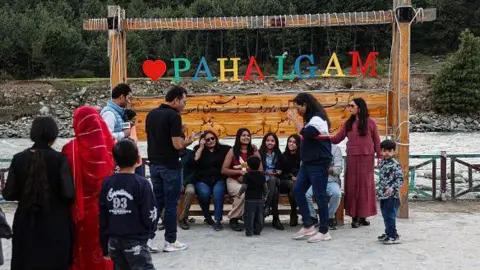
Nazakat Ali's phone rings in the evening, as it often does now. The 30-year-old tourist guide answers with the same calm every time - yes, it is safe; yes, he will be there; yes, they should come. On the other end are people planning holidays to the stunning Himalayan region, known for its mountains and meadows.
There is a lot of fear, he acknowledges. We have to convince them that everything is fine. One year after militants killed 26 people in Pahalgam - one of the deadliest attacks on tourists in Kashmir in decades - the region's tourism economy is still reeling.
Visitor numbers plummeted from nearly three million in 2024 to under 1.2 million in 2025, with 48 out of 87 tourist sites shut down post-attack. Though spots are reopening, Baisaran, where the tragedy occurred, remains closed.
The assault disrupted a crucial industry that has survived years of uncertainty. With the wounds still fresh, local businesses struggle, and while some tourists cautiously return, the once-bustling Pahalgam is now characterized by empty hotels and low visitor enthusiasm.
Last year my target was to make around 20 million rupees but I only made 1.5 million, said Mushtaq Ahmad Magrey, head of Pahalgam's hotel association. The rhythm of daily life has been altered; guides wait in vain for clients, while memories of the attack linger painfully. Tourists approach memorials, marking the spot where people lost their lives.
Amidst this somber reality, locals cling to hope as officials insist that Pahalgam's security is stable and outreach efforts are underway. However, for many, the shadow of fear and the scars of loss remain hard to dissipate.
The place feels cursed now, Ali says, his voice reflecting the turmoil beneath the surface of the landscape.