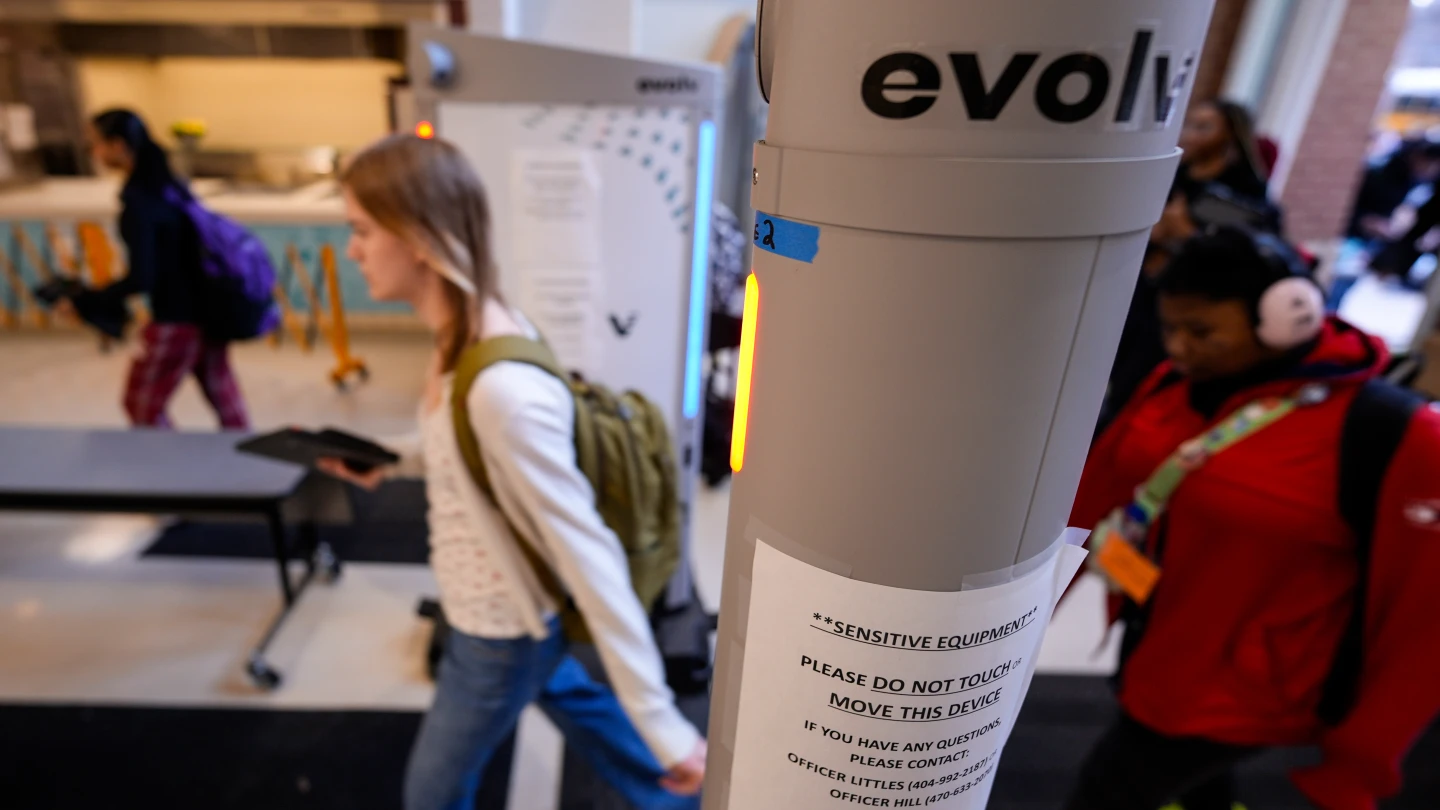
Georgia is on the verge of becoming the first state to require daily weapon checks for students entering public schools as part of a bill nearing passage, following a tragic shooting incident that claimed four lives in 2024. Junior Daria Lezczynska from Apalachee High School stated, That rifle would have never reached our hallways. Lives would have been saved. Families would not be grieving, students like me would not be carrying this trauma. The bill proposes the installation of advanced weapons detection systems, which combine computer analysis with existing security measures to enhance safety in educational settings.
Historical measures, such as metal detectors and clear backpack policies, have been in place at various schools, but the proposed technology marks a significant evolution in school security. Sponsor Chuck Efstration, Georgia's Republican house majority leader, argues that students deserve safety standards akin to those used in courthouses: It's very commonplace for me to walk through a weapons detection system when I enter into a courthouse. Georgia’s students and educators deserve similar security with weapons detection systems inside of every Georgia public school.
Despite the push for safety, there remains skepticism regarding the efficacy of such detection systems in preventing violence. Critics point out the often high costs and logistical challenges associated with maintaining such technologies. As the bill awaits final votes in both the Senate and the House, questions persist about funding—each detection system could run upwards of $10,000—and whether such measures are effective in truly curbing violence in schools.
A recent study revealed that just 6.2% of schools employed random metal detectors and only 2.4% implemented daily checks during the 2021-2022 school year. While Atlanta's school district saw a notable decline in found weapons since introducing a new detection system, opinions remain divided on the broader question: Are these measures addressing the root problem of gun accessibility and violence in society, or merely serving as a band-aid solution?