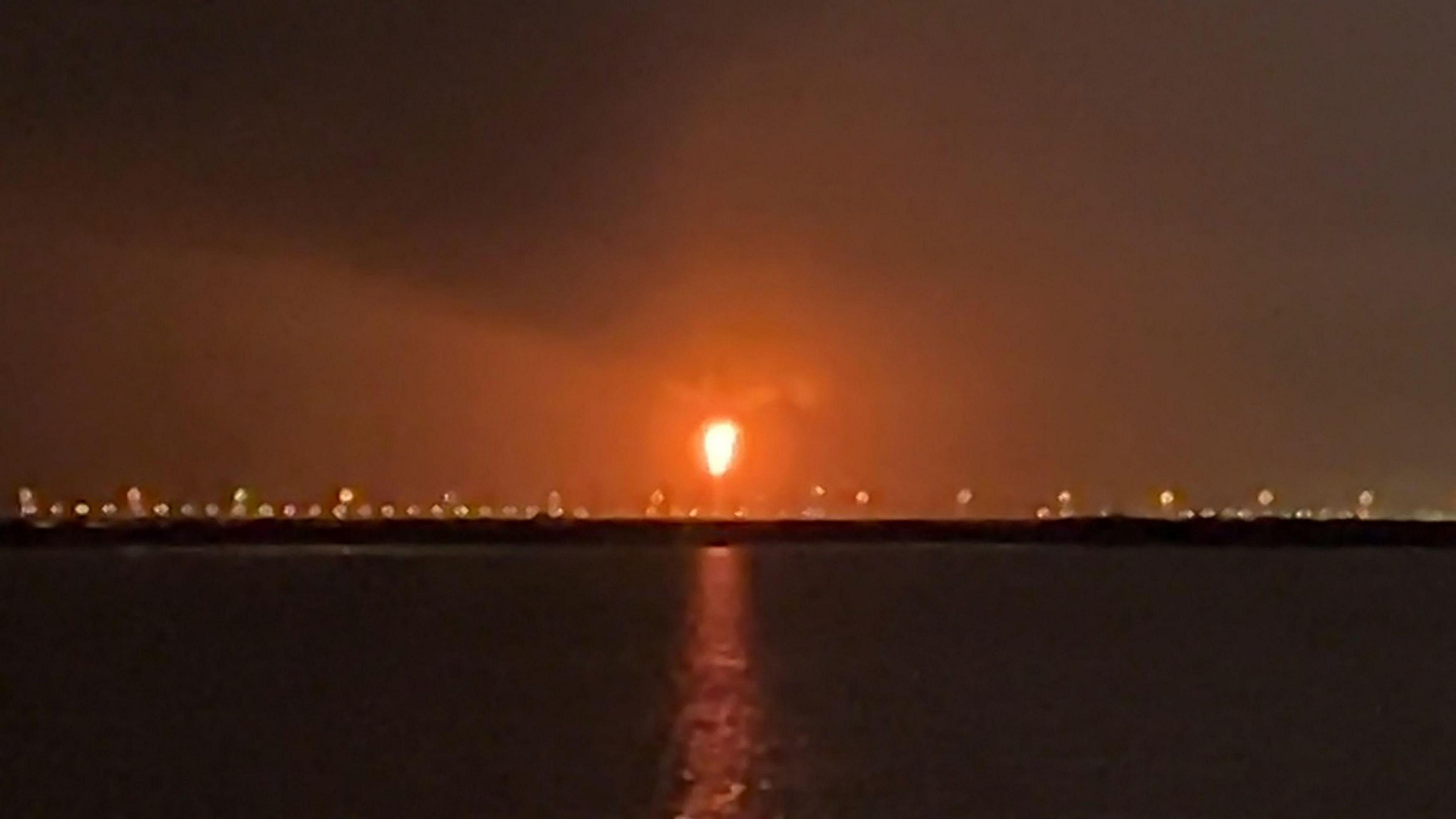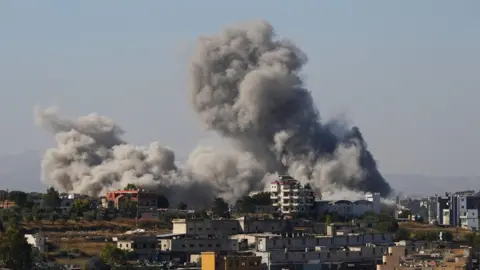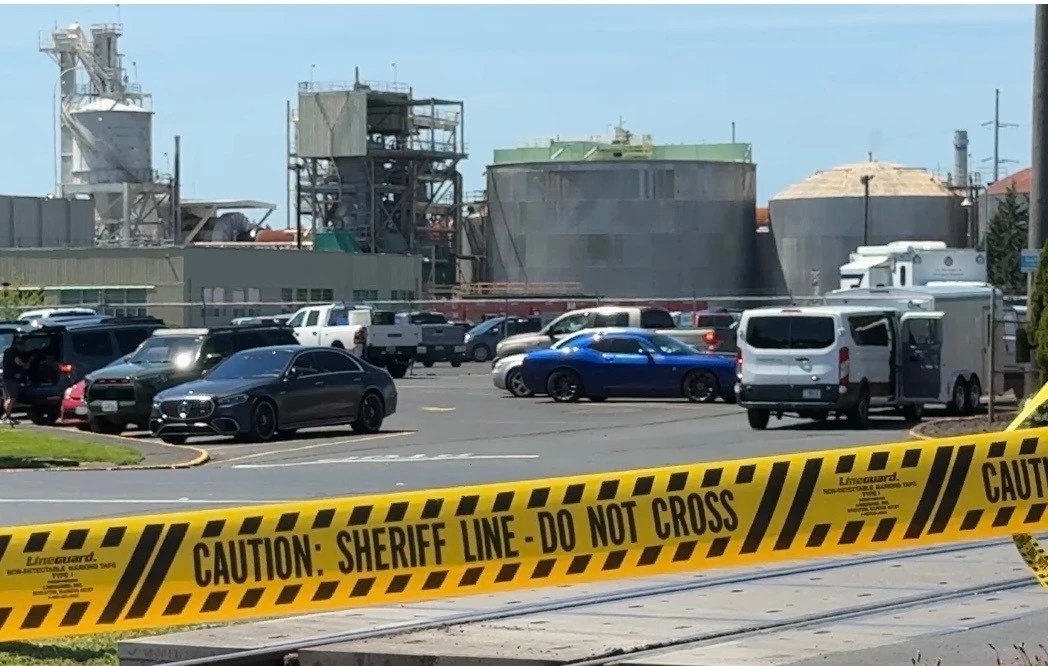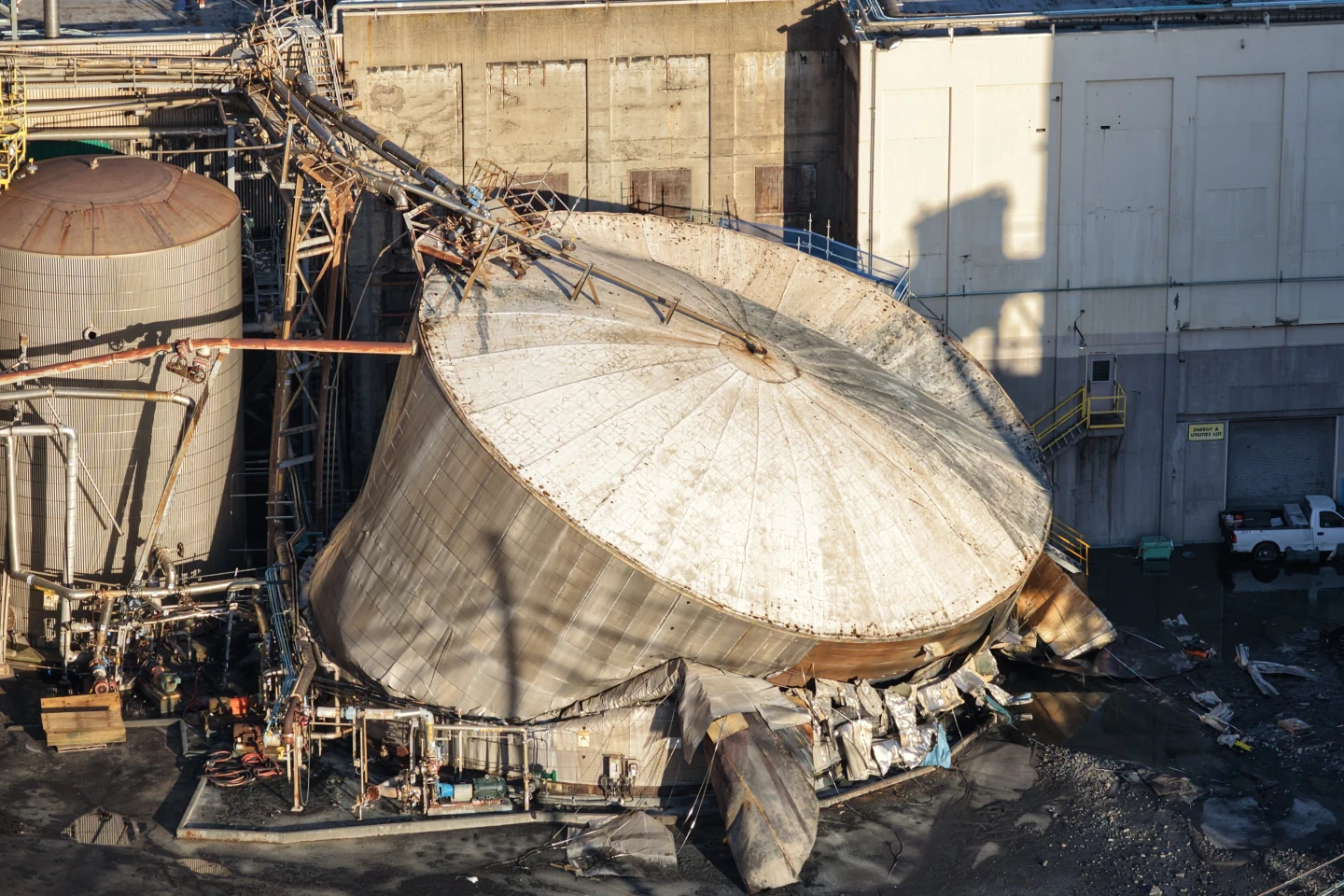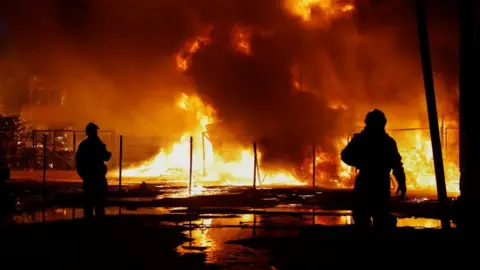
On Tuesday morning, a massive 500,000‑gallon tank of white liquor—an alkaline blend used to break down wood pulp—burst at the Nippon Dynawave Packaging Co. plant in Longview, Washington. The implosion sent a lethal wave of caustic fluid across the site, overturning pickup trucks, damaging adjacent buildings, and forcing emergency crews to halt operations in a dangerous zone.
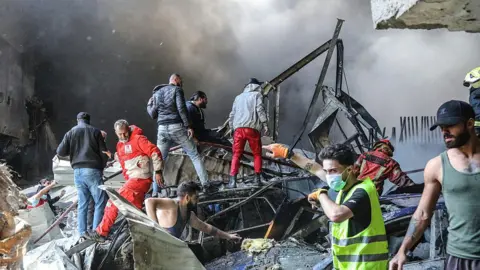
Nine of the eleven workers who died were found in the first 24 hours of the disaster, while firefighters collected debris and decontaminated the site before passing remains to the coroner’s office for identification. A further two workers remain missing, and rescue teams continue to scour the area, carefully avoiding residual chemical hazards and working with engineers to determine safe access points to the damaged structures.
The victims include brothers Tyler and Brad Covington, a celebrated grammatical champ and an electrician who helped his neighbors cut hay; Gilbert Bernal, an electrician and grandfather; John Forsberg, a witty trivia expert; and CJ Doran, a family‑supporting faith leader. Rescue workers recovered eight injured individuals, including a firefighter, many suffering burns or inhalation injuries.
Investigators have not yet identified the root cause of the collapse. The city of Longview—about 40,000 residents—has a long history with the paper and lumber industry, and it relies heavily on the local Mills’ footprint. Though the spill’s immediate impact on the air and drinking water was ruled negligible, the U.S. Environmental Protection Agency confirmed that some chemical residues entered the Columbia River. Longview officials have since worked to flush water from ditches and dilute river concentrations, ensuring no persistent effect.
Nippon Paper Group, the Japanese parent of the plant, issued a statement offering “heartfelt sympathies to the bereaved families.” Local community groups quickly organized vigils, fundraisers, and memorials in honor of the departed.
The tragedy underscores the precarious balance between industrial efficiency and safety, especially in settings handling volatile chemicals. In the wake of this event, the industry is re‑examining safety protocols, emergency response plans, and the design of chemical storage tanks to prevent a repeat of this loss of life.
Nine of the eleven workers who died were found in the first 24 hours of the disaster, while firefighters collected debris and decontaminated the site before passing remains to the coroner’s office for identification. A further two workers remain missing, and rescue teams continue to scour the area, carefully avoiding residual chemical hazards and working with engineers to determine safe access points to the damaged structures.
The victims include brothers Tyler and Brad Covington, a celebrated grammatical champ and an electrician who helped his neighbors cut hay; Gilbert Bernal, an electrician and grandfather; John Forsberg, a witty trivia expert; and CJ Doran, a family‑supporting faith leader. Rescue workers recovered eight injured individuals, including a firefighter, many suffering burns or inhalation injuries.
Investigators have not yet identified the root cause of the collapse. The city of Longview—about 40,000 residents—has a long history with the paper and lumber industry, and it relies heavily on the local Mills’ footprint. Though the spill’s immediate impact on the air and drinking water was ruled negligible, the U.S. Environmental Protection Agency confirmed that some chemical residues entered the Columbia River. Longview officials have since worked to flush water from ditches and dilute river concentrations, ensuring no persistent effect.
Nippon Paper Group, the Japanese parent of the plant, issued a statement offering “heartfelt sympathies to the bereaved families.” Local community groups quickly organized vigils, fundraisers, and memorials in honor of the departed.
The tragedy underscores the precarious balance between industrial efficiency and safety, especially in settings handling volatile chemicals. In the wake of this event, the industry is re‑examining safety protocols, emergency response plans, and the design of chemical storage tanks to prevent a repeat of this loss of life.