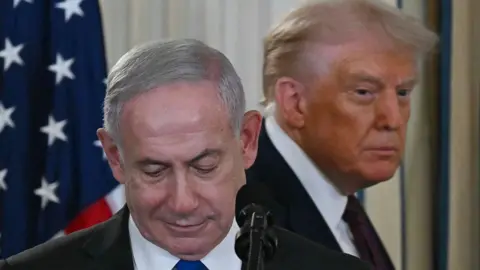
A US federal judge has temporarily blocked the Trump administration from deploying National Guard troops from Texas and California to Portland, Oregon.
The decision late on Sunday comes after the same court denied Trump's attempt to deploy Oregon's own National Guard members to Portland.
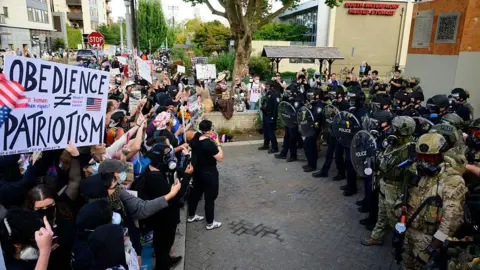
Portland is the latest Democrat-led city targeted as part of the president's attempt to address what he says is out-of-control crime, amid protests over his administration's immigration enforcement.
Trump has also authorised the deployment of National Guard troops from other states to Chicago in Illinois, to address what he says is out-of-control crime.
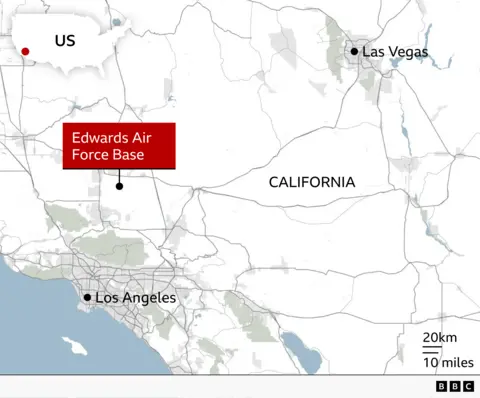
The ruling from US District Judge Karin Immergut came shortly after the Pentagon confirmed 200 members of the California National Guard had been reassigned to Portland to support US Immigration and Customs Enforcement and other federal personnel performing official duties.
California and Oregon had sought a temporary restraining order against the deployment.
Judge Immergut, who was appointed by Trump, stated there was no evidence that recent protests in the city made the presence of federalised National Guard troops necessary.
During the emergency hearing, she pressed lawyers from the federal government on how the deployment of troops from other states was not simply a way to circumvent her earlier decision denying the deployment of Oregon's National Guard.
In this decision, she noted that using the military to quell unrest without Oregon's consent risked state sovereignty and inflamed tensions in Portland.
Sunday's ruling will remain effective until at least 19 October. The White House has yet to comment.
Previously, the Trump administration stated the president was exercising his lawful authority to protect federal assets and personnel in Portland following violent riots and attacks on law enforcement.
Meanwhile, Illinois Governor JB Pritzker criticized the troop deployment as Trump's invasion and demanded local autonomy in law enforcement decisions.
This ruling positions the judicial system as a critical check to executive power, especially regarding military deployments within the United States.