Survival Amid Chaos: Eyewitness Accounts from the Sudanese War
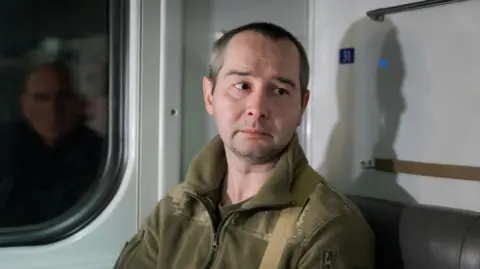
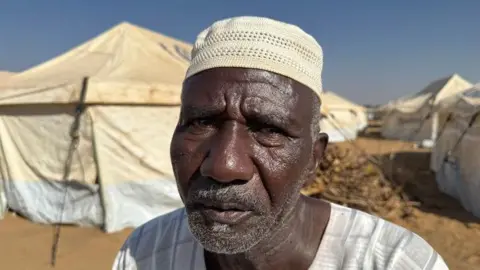
In the midst of the brutal civil war in Sudan, horrifying accounts emerge from survivors fleeing their homes in horror. Abdulqadir Abdullah Ali, a 62-year-old veteran of the ongoing conflict, describes how he suffered serious nerve damage to his leg during a prolonged siege of el-Fasher. His desperation to escape soon overwhelmed any physical pain as paramilitary forces surged through the city, turning the streets into a scene of chaos.
The morning the RSF came, there were many bullets and explosions going off, he narrated. Fearful families scattered in different directions, desperately looking for safety amidst the chaos. After a prolonged 18-month siege, the fall of el-Fasher marked a turning point in the Sudanese civil war.
The BBC has ventured into army-controlled territory to listen to the first-hand accounts of survivors who escaped the city. The stories reveal a tale of brutality inflicted by the notorious Rapid Support Forces (RSF), who took control of el-Fasher, contributing to reports of mass atrocities and drawing international attention.
Survivors, like Mr. Ali, describe harrowing scenes of violence where civilians were targeted. They shot at the elderly and the defenseless with live ammunition, he recounted, detailing his desperate escape. Others, like Mohammed Abbaker Adam, reflected on their harrowing journeys through checkpoints manned by armed RSF soldiers ready to show no mercy.
The road to safety was littered with death; abandoned bodies were left unburied on the route. Many, unable to escape the violence, remain unaccounted for amid this overwhelming humanitarian crisis.
With over 260,000 estimated to have been in el-Fasher at the time of its capture, reports indicate that less than half have been located following the RSF’s violent takeover. Aid agencies warn that many individuals died trying to escape, seized by dangers, or could not afford to pay for their passages through grim checkpoints.
Amidst the distress, stories of resilience persist. Stranded families desperately search for one another in makeshift camps, grappling with fear and uncertainty. Some witness to the horrors of war, are determined to help others survive.
As the world watches and waits for action, the survivors remain trapped in despair and conflict. Empowered with their harrowing narratives, they personify the ongoing struggle for peace and safety in a land torn apart by civil war.
Additional reporting by Ismail Ali Alshaikh and Ed Habershon