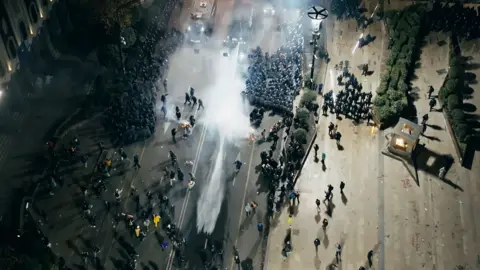
Georgia's authorities used a World War One-era chemical weapon to quell anti-government protesters last year, according to evidence gathered by the BBC.
You could feel [the water] burning, one protester recounted, who was targeted by water cannons in Tbilisi. Many demonstrators reported ongoing symptoms such as shortness of breath, coughing, and even vomiting for weeks following the incidents.
Experts have identified the chemical agent likely used as 'camite,' a toxic compound with origins dating back to WWI. Despite the government labeling the BBC’s findings as absurd, evidence from whistleblowers and medical studies indicate significant and potentially dangerous reactions among those exposed.
Authorities have been accused of escalating police violence in an effort to silence dissent, raising alarms over the treatment of citizens and the ethical implications of employing chemical agents.
Dr. Konstantine Chakhunashvili, a paediatrician and activist, documented numerous cases of severe reactions among protesters, with a recently published study confirming alarming health indicators linked to the chemical exposure. Former policemen corroborated claims about the chemical content used in the protests, drawing attention to the continued risk posed by such outdated and harmful materials.
The implications of this incident extend beyond Georgia, prompting discussions about the international regulation of riot control measures and the importance of adhering to human rights standards during public demonstrations.