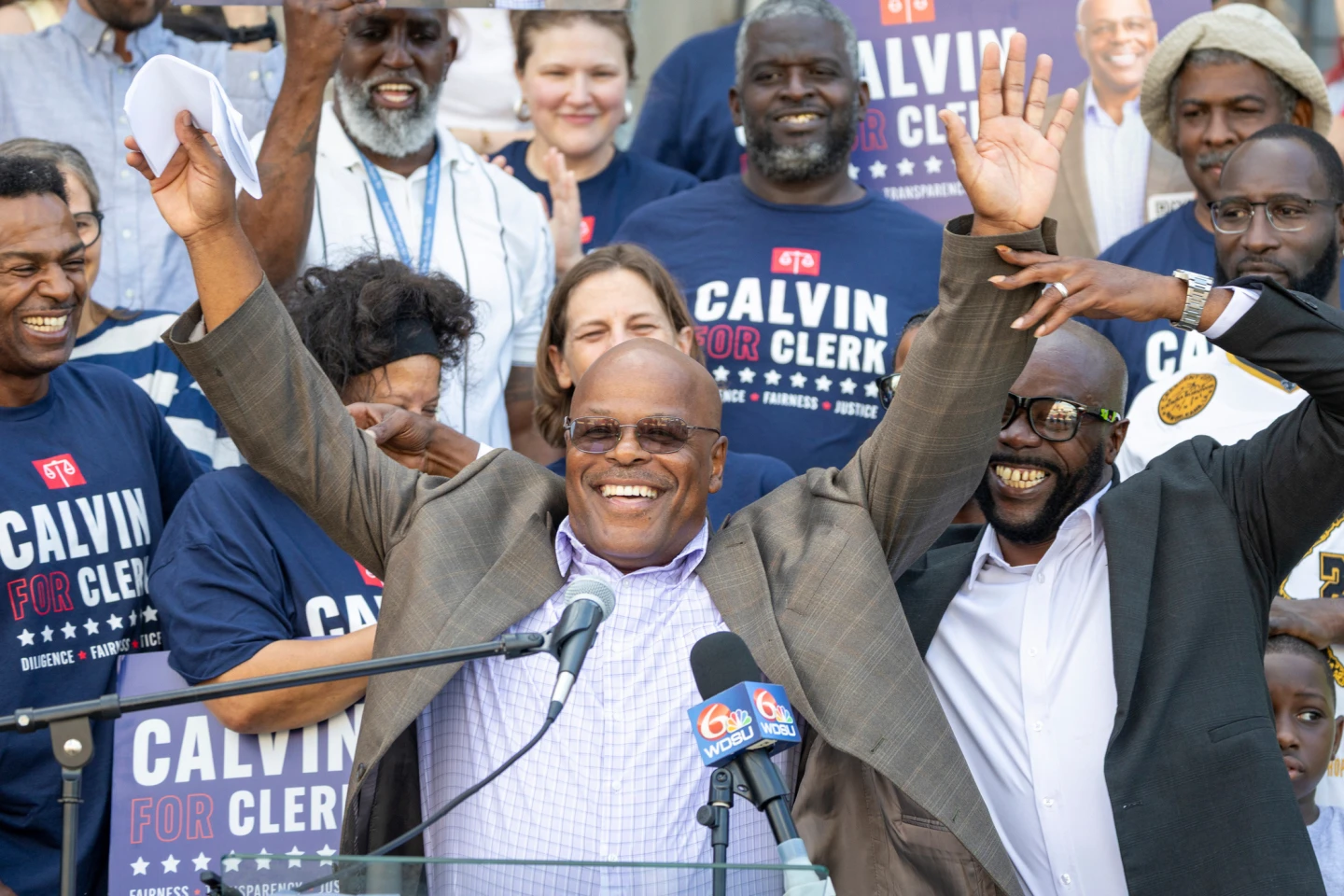
NEW ORLEANS (AP) – In a dramatic turn of events, Calvin Duncan, a man exonerated after spending nearly 30 years imprisoned for a wrongful conviction, has won a fervent campaign to become the Orleans Parish Clerk of Criminal Court. However, his victory is met with swift opposition from Louisiana’s Republican-controlled legislature, which is planning to eliminate his role before he is even sworn in.
Securing 68% of the vote last November, Duncan vowed to reform a judicial system that had failed him and many others, leveraging his painful experiences of fighting for court access while incarcerated. Nonetheless, legislators have voted to terminate the clerk role as part of a broader GOP push aimed at streamlining the judiciary in New Orleans, a predominantly Democratic area with a majority Black population.
Duncan sees the legislative action as retaliation for his activism and refusal to bow to pressure from those who have historically denied his innocence. Despite being listed on the National Registry of Exonerations, Duncan's past plea deal - accepted under duress - is used by his opponents to argue against his claims of exoneration. The push to repeal his position is viewed not just as a maneuver directed at Duncan, but as a calculated effort to undermine the collective voice of the voters who chose him.
Standing firm, Duncan described the situation as a direct attack on democracy, stating, ‘The citizens of New Orleans overwhelmingly said: ‘I want to give this person a chance; he can make a difference.' What this bill does, it says: ‘Thank you, but you wasted your time.’
As the scheduled swearing-in date of May 4 approaches, tensions mount as the GOP strives to pass the law that would prevent Duncan from taking office, while he remains resolute in his commitment to implementing crucial changes in the judicial system.