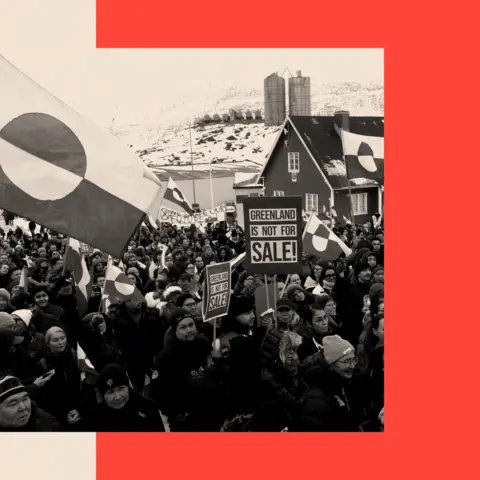
Something in Europe has snapped. Donald Trump doubled down again on Monday night in his insistence that the US has to have Greenland for national security reasons. He predicted that Europe's leaders aren't gonna push back too much. But that's not the plan they have in mind when their paths cross with the US president at the World Economic Forum (WEF) on Wednesday.
Greenland is a semi-autonomous territory of Denmark - a member of the EU and of NATO. President Trump is now leaning heavily on Denmark's allies in both those organisations to abandon Copenhagen and let the US take control of Greenland, or face punitive taxes on all their exports to the United States.
Germany's finance minister declared in response, we will not allow ourselves to be blackmailed, while France acknowledged the unprecedented nature of the current circumstances, where an ally is using tariffs as a geopolitical weapon.
European leaders are now employing a strategy that mixes quiet support on Arctic security with the threat of significant tariffs. The EU may impose €93 billion worth of tariffs on US goods if Trump moves forward with his Greenland plans. The stakes are high for European economies, already facing downturns, particularly in industries dependent on US markets.
The EU's top diplomat stated the bloc will hold its ground yet remains committed to avoiding conflict. European leaders recognize that they must stick together in addressing Trump's aggressive tactics, as any fraying of solidarity could leave them vulnerable.
As global powers like Russia and China monitor the situation, the ramifications of this diplomatic crisis extend beyond Europe. The unfolding geopolitical environment demands that Europe re-evaluates its responses to threats against allies like Denmark, balancing immediate trade concerns with long-term security strategies. The transatlantic relationship, although strained, has not yet broken, and European unity remains pivotal in facing Trump's assertive foreign policy.