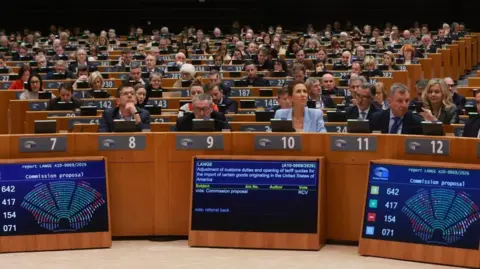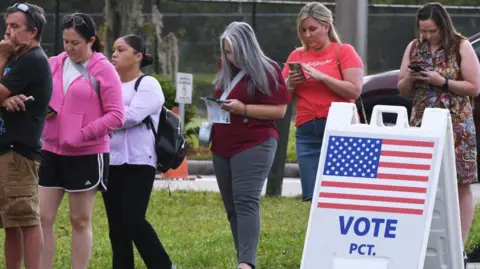
The US House of Representatives this week passed legislation that would require voters to provide proof-of-citizenship as the midterm elections approach.
The Safeguard American Voter Eligibility, or SAVE America Act, would require individuals to present a valid US passport or birth certificate when registering to vote. This proposal has raised concerns among various groups, particularly affecting married individuals who may possess changed names that don't match their documents.
While Democrats assert that the legislation disenfranchises eligible voters, Republicans argue that it is a necessary measure to prevent voter fraud. The bill's fate now rests in the Senate, where it struggles to find sufficient backing.
Here are key details about this legislation:
New Requirements
The SAVE Act mandates Americans prove their US citizenship during voter registration and present valid photo identification before casting ballots. Although some states require photo ID at the polls, federal law does not necessitate proof of citizenship, as proposed in this legislation. It includes provisions for those who have changed their names to submit additional documentation for identity verification, particularly concerning individuals after marriage.
Election officials could face criminal penalties for registering voters without the required proof of citizenship. An estimated 21 million Americans lack readily available documentation to prove their citizenship, and 2.6 million do not have any form of government-issued photo ID.
Public Opinion and Political Response
A recent Pew Research Center poll indicated strong public support for the requirement of government-issued photo identification among voters, including a significant percentage of both Democrats and Republicans.
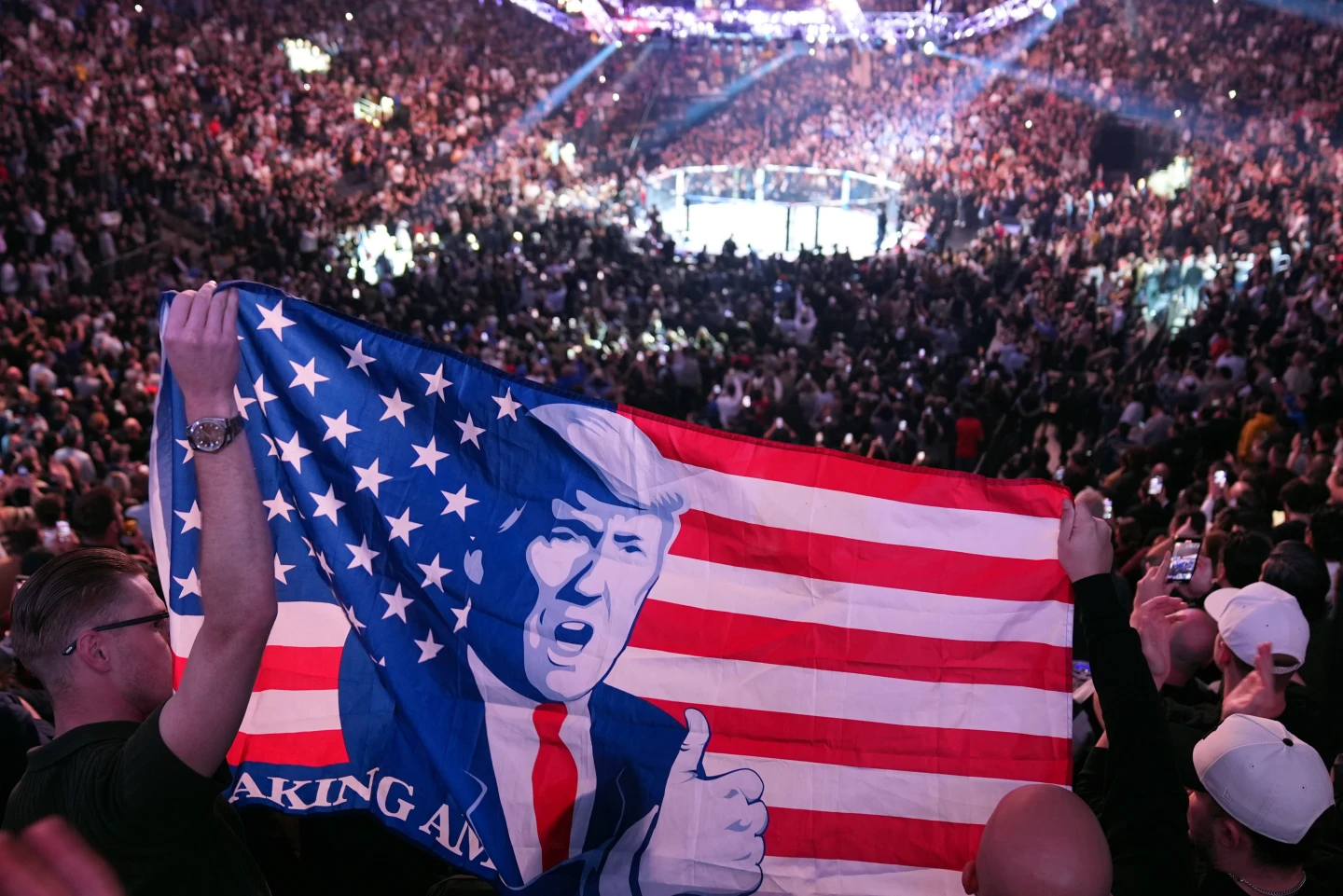
President Donald Trump has backed the SAVE Act, citing it as a measure to ensure elections are decided solely by American citizens. Despite these claims, critics highlight the lack of evidence supporting widespread voter fraud.
Disputes surrounding the bill are expected as lawmakers continue to weigh the implications of its provisions. While it passed the House with a narrow vote, the Senate's forthcoming actions remain unclear.