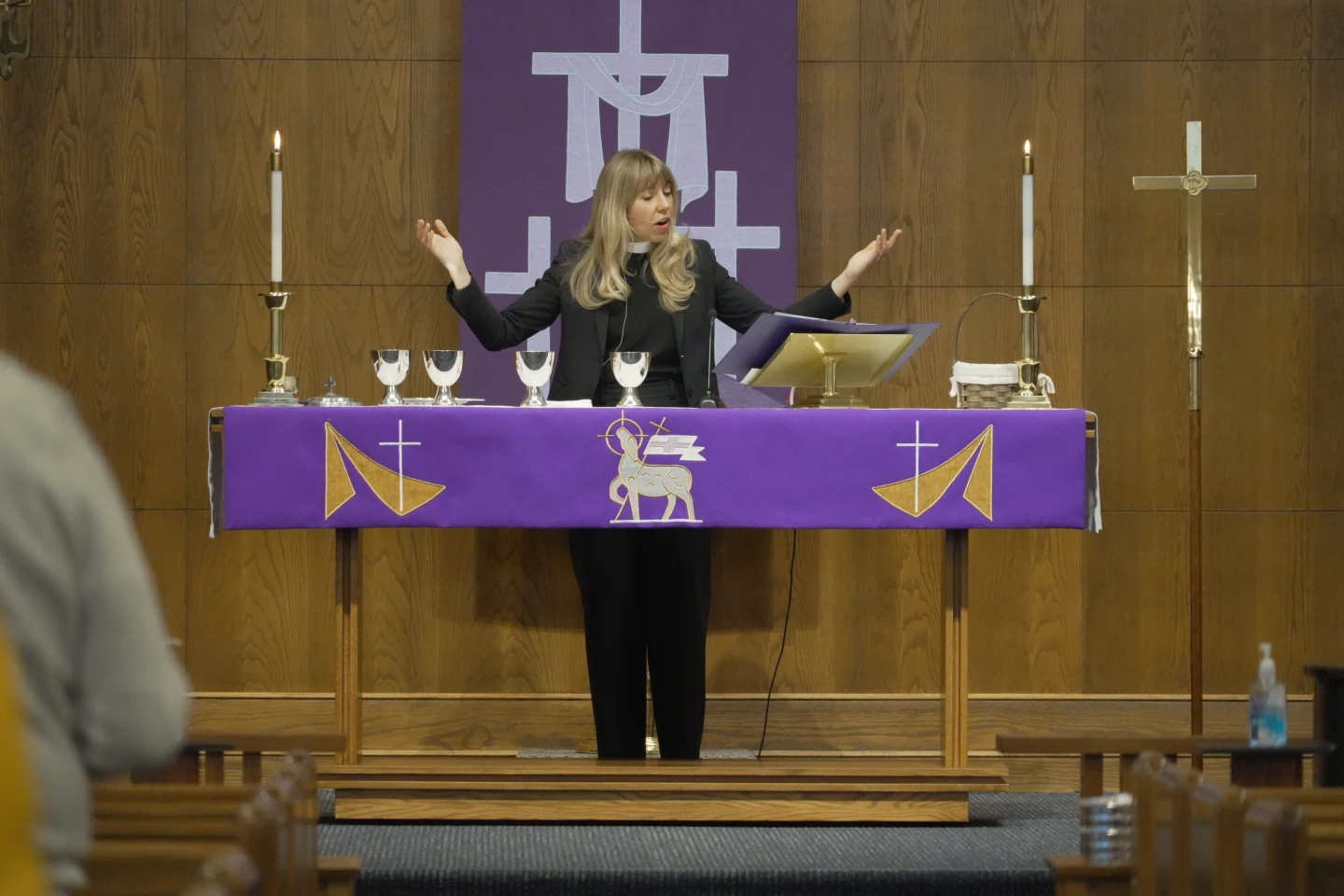
DES MOINES, Iowa – The Rev. Sarah Trone Garriott is making waves in Iowa as she navigates her dual roles as a Lutheran pastor and a congressional candidate, delivering a compelling message of inclusivity and health advocacy. Her recent sermon urged congregants to embrace strangers, aligning closely with her campaign policies targeting Medicaid cuts in rural areas.
Notably, Trone Garriott is among three Democratic clergy members in Iowa vying for seats in the U.S. House, signaling a notable shift in political alignment within the religious community. Clergy members who once predominantly supported Republicans are now stepping up as progressive candidates, representing diverse interpretations of faith that prioritize social justice.
Melissa Deckman, CEO of the Public Religion Research Institute, comments on this transformation, stating that many on the Democratic side are challenging the conservative narratives that have dominated discourse on Christianity in politics. Democrats now face the task of engaging religious voters authentically while acknowledging their diverse beliefs.
Coinciding with this dialogue, clergy like Texas state representative James Talarico have gained prominence for their vocal stance on issues pivotal to their faith, including abortion rights and LGBTQ+ advocacy. His response to legislation around religious displays in schools emphasizes a more nuanced understanding of faith’s role in public life.
The challenges ahead include resonating with diverse voter bases, as many Democrats strive to articulate their 'why'—the motivations rooting their political efforts in faith. With speakers from various religious backgrounds emerging as political candidates, the landscape is gradually shifting, marking a new chapter where progressive faith leaders aim to reframe the religious narrative in American politics.