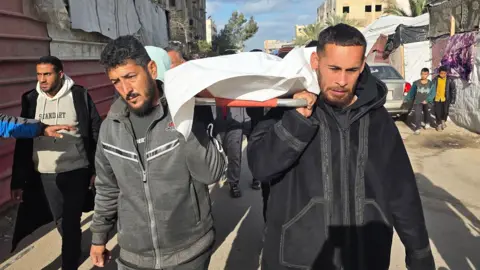
The border point had been closed after Israel's invasion of the southern city of Rafah in May 2024, but is now reopening to facilitate the movement of wounded individuals as part of a cease-fire agreement reached between Israel and Hamas.
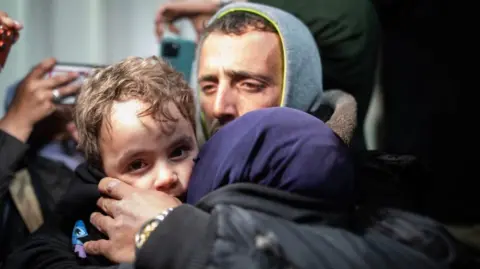
On Saturday, medical workers began transporting sick and injured Palestinians out of Gaza through the Rafah border crossing, marking the first authorized evacuation in nine months. This significant development arises from a cease-fire accord, yet officials from the Gaza Health Ministry reported that only fifty out of the thousands in dire need were permitted to cross that day.
Egypt's state-owned Al Qahera News broadcasted the arrival of ambulances on their territory, carrying those needing urgent medical attention. The Rafah crossing had remained inaccessible after Israeli forces launched an operation in Rafah itself in May, which significantly strained the already fragile healthcare system in Gaza.
The current conflict has devastated medical institutions across the region, including the Al-Shifa Hospital in Gaza City. Allegations have surfaced from Israeli officials accusing Hamas of militarizing medical facilities; a claim Hamas vehemently disputes. In a prior phase, the crossing had been a vital channel for both patients seeking treatment and humanitarian aid entering Gaza.
Under the newly drawn structure of the cease-fire, a daily quota of fifty wounded individuals, including militants, is set to leave Gaza with necessary approvals from both Israel and Egypt. The agreement stipulates that the number of evacuees could expand, alongside a resumption of goods and commercial activities, though specific timelines remain undisclosed.
Rik Peeperkorn, the World Health Organization's leading representative for Gaza and the Israeli-occupied West Bank, emphasized that while the evacuation marked a positive turn, the pace of departures must quicken, pointing out that around 12,000 to 14,000 individuals require severe medical care outside the territory.
Previously, the Palestinian Authority governed the Rafah border alongside Hamas’s oversight, but a fresh security arrangement now dictates its operation post-conflict in collaboration with Israel, Egypt, and the Palestinian Authority. Israeli officials have expressed reluctance at granting full control of Gaza to the Palestinian Authority despite diplomatic pressures, including suggestions from the former Biden administration.
Prime Minister Benjamin Netanyahu's office has stated that any engagement of the Palestinian Authority would be limited to nominal administrative roles while Israeli forces would maintain protective positions around the crossing, ensuring that passage remains subject to Israeli security clearance for all travelers.
On Saturday, medical workers began transporting sick and injured Palestinians out of Gaza through the Rafah border crossing, marking the first authorized evacuation in nine months. This significant development arises from a cease-fire accord, yet officials from the Gaza Health Ministry reported that only fifty out of the thousands in dire need were permitted to cross that day.
Egypt's state-owned Al Qahera News broadcasted the arrival of ambulances on their territory, carrying those needing urgent medical attention. The Rafah crossing had remained inaccessible after Israeli forces launched an operation in Rafah itself in May, which significantly strained the already fragile healthcare system in Gaza.
The current conflict has devastated medical institutions across the region, including the Al-Shifa Hospital in Gaza City. Allegations have surfaced from Israeli officials accusing Hamas of militarizing medical facilities; a claim Hamas vehemently disputes. In a prior phase, the crossing had been a vital channel for both patients seeking treatment and humanitarian aid entering Gaza.
Under the newly drawn structure of the cease-fire, a daily quota of fifty wounded individuals, including militants, is set to leave Gaza with necessary approvals from both Israel and Egypt. The agreement stipulates that the number of evacuees could expand, alongside a resumption of goods and commercial activities, though specific timelines remain undisclosed.
Rik Peeperkorn, the World Health Organization's leading representative for Gaza and the Israeli-occupied West Bank, emphasized that while the evacuation marked a positive turn, the pace of departures must quicken, pointing out that around 12,000 to 14,000 individuals require severe medical care outside the territory.
Previously, the Palestinian Authority governed the Rafah border alongside Hamas’s oversight, but a fresh security arrangement now dictates its operation post-conflict in collaboration with Israel, Egypt, and the Palestinian Authority. Israeli officials have expressed reluctance at granting full control of Gaza to the Palestinian Authority despite diplomatic pressures, including suggestions from the former Biden administration.
Prime Minister Benjamin Netanyahu's office has stated that any engagement of the Palestinian Authority would be limited to nominal administrative roles while Israeli forces would maintain protective positions around the crossing, ensuring that passage remains subject to Israeli security clearance for all travelers.