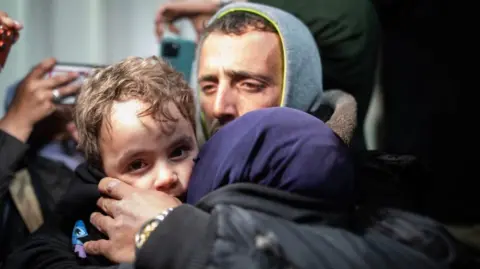
As two Gazan women passed through the newly reopened Rafah crossing with Egypt, they reported facing extensive checks by a local Palestinian militia, known as Abu Shabab, at an Israeli military checkpoint within Gaza. Lamia Rabia shared her experience of being escorted by Israeli forces to this site, where searches were conducted by militia members aligned with the Israeli military.
There was a woman from the Abu Shabab group who conducted the searches on the women, Rabia detailed, indicating a disturbing intersection between local militant groups and military authorities. Following this, interactions with Israeli officials ensued, where further questioning took place.
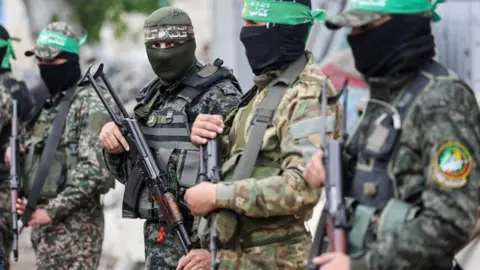
The coordination between the Israeli military and the Abu Shabab militia raises questions regarding control and security in the region. While the Israeli Defense Forces (IDF) refused to comment on allegations of collaboration, the Abu Shabab militia, supported by Israel, was purportedly playing a crucial role in ensuring security at the border crossing.
Additionally, the European Union, overseeing some operations at Rafah, reportedly debated monitoring the entry of new arrivals more closely, following instances of harsh treatment and confiscations of personal belongings during checks conducted on returning Palestinians.
In a commentary that underlines the desperation of many, Rabia explained that group members made offers of assistance with travel to Europe, alongside allegations of physical mistreatment during checks, suggesting a complex web of power dynamics that prevail at the border.
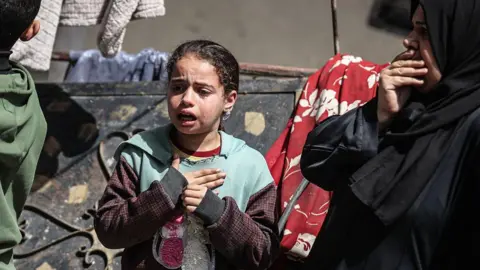
Despite initial intentions to facilitate medical evacuations for a large number of Palestinians, the reality on the ground displayed a significant reduction in those able to cross on the reopening day, only 12 succeeding despite prior screenings. This points to a larger systemic issue facing Gaza residents seeking crucial medical care.
The reopening of the Rafah crossing signifies a critical yet tumultuous phase in Gaza's history, reflecting not just humanitarian needs but also the ongoing power struggle between various factions within the territory. As new policies are implemented, the capacity for those in need to navigate these barriers remains uncertain, raising further questions about the future stability of the region.