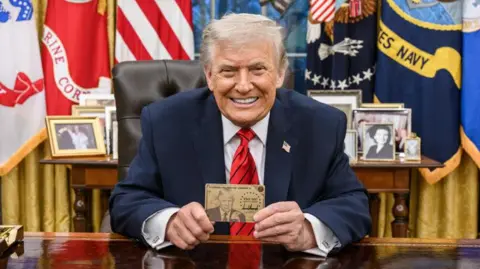
Donald Trump has announced a "significant turn" in US-China trade negotiations following the initial day of talks held in Switzerland. In a post on social media, the president described the discussions as "very positive" and noted that both parties negotiated with a spirit of cooperation and constructive engagement.
The ongoing trade dispute, which has seen the US impose tariffs of 145% on Chinese imports, has provoked China to counter with tariffs up to 125% on certain American goods. This weekend marks their first direct talks since Trump’s initiation of tariffs at the beginning of the year.
Details from the discussions remain sparse, primarily communicated through Trump’s Truth Social account. The dialogue is anticipated to continue on Sunday, featuring high-level conversations between Chinese Vice-Premier He Lifeng and US Treasury Secretary Scott Bessent. Trump expressed optimism, stating, “For the benefit of both nations, we aim to facilitate greater access for American business to Chinese markets. GREAT PROGRESS MADE!!!”
On the eve of the negotiations, White House Press Secretary Karoline Leavitt clarified that the US would not reduce tariffs unilaterally and that concessions would need to come from China. Both nations had issued warnings leading up to the meeting, with China emphasizing the need for the US to lessen tariffs, while Bessent highlighted a focus on "de-escalation", neither classifying the talks as a comprehensive trade agreement.
Chinese state media reported that Beijing opted to engage in discussions after weighing global expectations, national interests, and appeals from American businesses for regulatory relief.
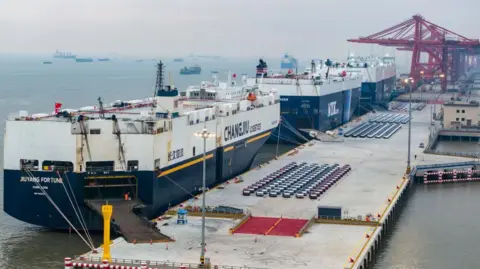
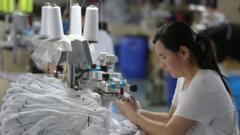
Research from last month revealed the struggles of Chinese exporters due to US tariffs, with companies like Sorbo Technology reporting that unsold goods remain stored in warehouses instead of reaching the US market. Additionally, the US economy faced contraction during the first quarter of the year, diminishing at an annual rate of 0.3% as businesses rushed to import goods before tariffs escalated.
The trade skirmish intensified recently when Trump instituted a universal baseline tariff on all incoming goods to the US, referring to the day as "Liberation Day". About 60 trading partners, labeled by the White House as the "worst offenders," were hit with increased rates, including China and the European Union.
In recent developments, a trade agreement between the US and the UK was revealed, which would lower tariffs on up to 100,000 British cars exported to the US from 25% to 10%—matching the previous year’s export numbers. The automotive sector remains a crucial portion of the UK’s trade with the US, valued at around £9 billion last year.