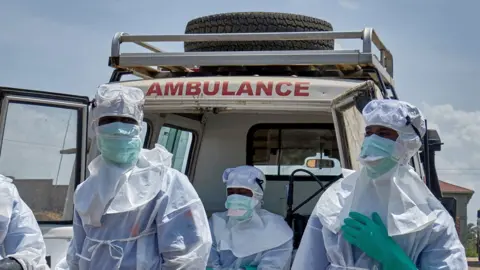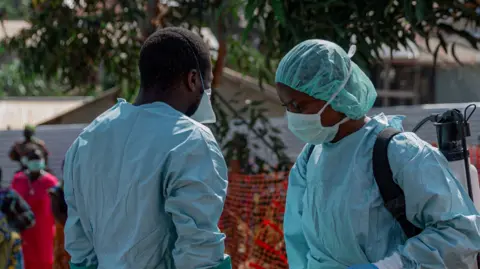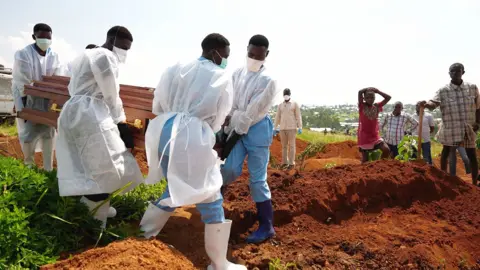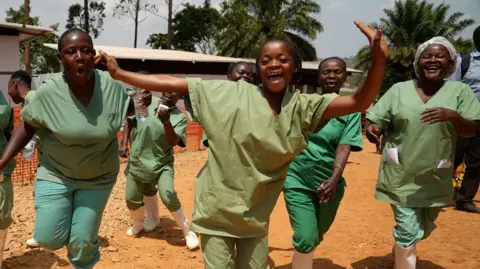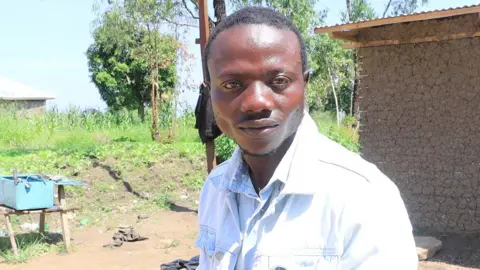
People living close to the epicenter of a deadly Ebola outbreak have told of their fear, as the World Health Organization (WHO) warned that cases may be spreading faster than originally thought. A man in the Democratic Republic of Congo's northeastern Ituri province said infected people were dying 'very fast,' adding: 'Ebola has tortured us.'
The virus is believed to have killed 136 people in the DR Congo, with more than 514 cases suspected in the country, and one person has died in neighboring Uganda. WHO's Dr Anne Ancia stated that investigations have revealed the outbreak's reach may be more extensive than first estimated.
The London-based MRC Centre for Global Infectious Disease Analysis reported significant under-detection and estimated that the actual number of cases could be over 1,000.
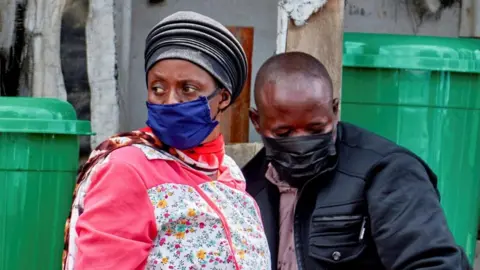
Community members like Bigboy expressed their fears and reported taking precautions by washing hands and seeking protective supplies. Another local resident stated they are aware of the seriousness of the threat but lack knowledge on how to respond if a family member contracts the disease.
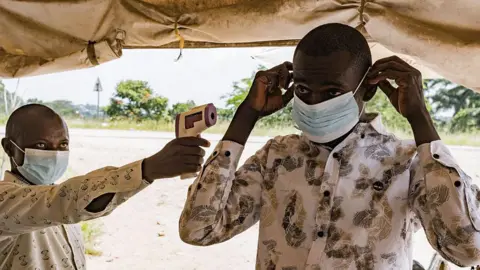
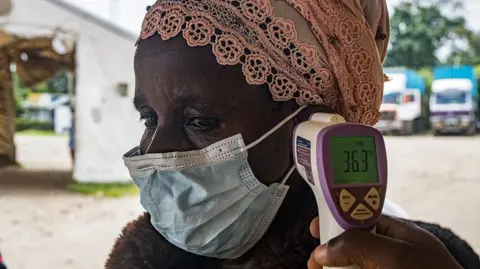
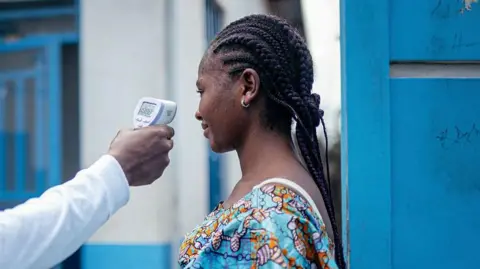
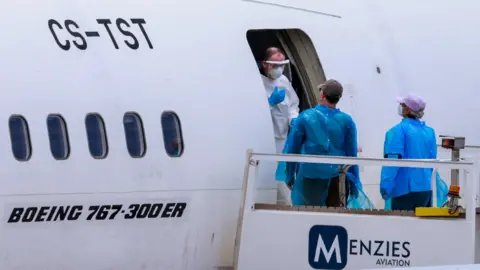
With the outbreak escalating, international responses are ramping up. Precautions are being taken by neighboring countries such as Uganda and Rwanda, which have tightened border screenings. The WHO has declared the situation an international emergency, releasing nearly $4m to combat the epidemic.
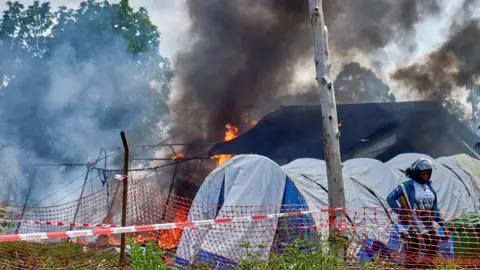
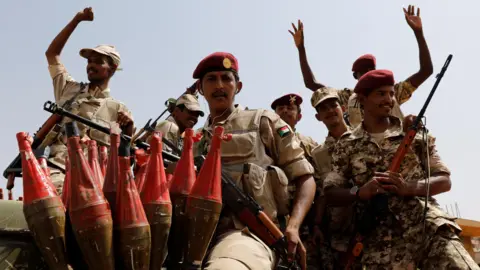
The ongoing conflict and lack of healthcare infrastructure in the region further complicate efforts to manage the outbreak, which is feared to have been ongoing for weeks before it was officially recognized on April 24.
Currently, there is no vaccine available for the strain causing this outbreak, but WHO is assessing available treatments for potential protection. The true extent and implications of the outbreak remain uncertain as communities brace themselves for an escalating crisis.
The virus is believed to have killed 136 people in the DR Congo, with more than 514 cases suspected in the country, and one person has died in neighboring Uganda. WHO's Dr Anne Ancia stated that investigations have revealed the outbreak's reach may be more extensive than first estimated.
The London-based MRC Centre for Global Infectious Disease Analysis reported significant under-detection and estimated that the actual number of cases could be over 1,000.
Community members like Bigboy expressed their fears and reported taking precautions by washing hands and seeking protective supplies. Another local resident stated they are aware of the seriousness of the threat but lack knowledge on how to respond if a family member contracts the disease.
With the outbreak escalating, international responses are ramping up. Precautions are being taken by neighboring countries such as Uganda and Rwanda, which have tightened border screenings. The WHO has declared the situation an international emergency, releasing nearly $4m to combat the epidemic.
The ongoing conflict and lack of healthcare infrastructure in the region further complicate efforts to manage the outbreak, which is feared to have been ongoing for weeks before it was officially recognized on April 24.
Currently, there is no vaccine available for the strain causing this outbreak, but WHO is assessing available treatments for potential protection. The true extent and implications of the outbreak remain uncertain as communities brace themselves for an escalating crisis.