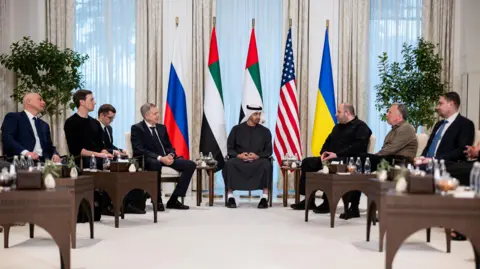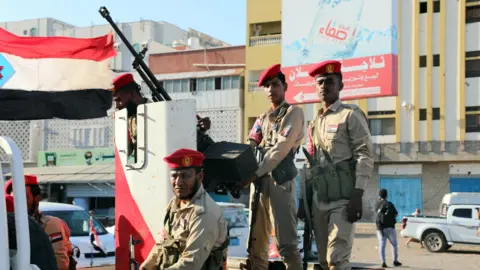
Saudi Arabia has backed a demand from Yemen's presidential council for the United Arab Emirates (UAE) to withdraw within 24 hours, after a Saudi-led coalition bombed what it said was a weapons shipment for UAE-backed separatists at the port of Mukalla. The Saudi foreign ministry accused the UAE of pressuring the Southern Transitional Council (STC), which seeks independence for southern Yemen, to launch recent offensives in the eastern provinces of Hadramawt and al-Mahra. The kingdom has warned it will take measures to confront what it considers such highly dangerous actions.
The UAE's foreign ministry denied that the shipment contained weapons and expressed deep regret at the Saudi statement, strongly condemning allegations of orchestrating military operations that threaten Saudi Arabia's security. The STC's leaders argued that the ultimatum for the withdrawal had no legal basis and reaffirmed their commitment to continue collaborating with coalition partners against the Iran-backed Houthi movement, which controls significant territories in northwestern Yemen.
Rashad al-Alimi, head of Yemen's presidential council, instructed the cancellation of a joint defense pact with the UAE and declared a state of emergency for 90 days, signaling a need to confront threats from the Houthis and internal unrest linked to what he deemed mutinous military elements under UAE direction.
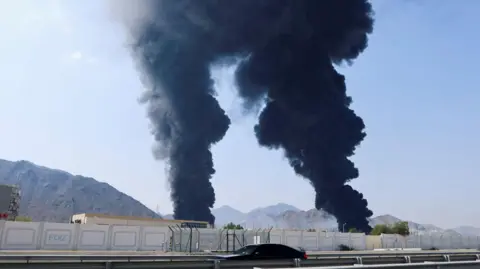
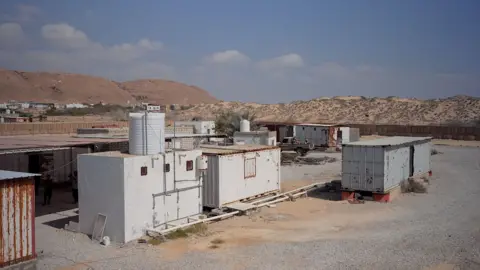
The tensions escalated after the coalition conducted a limited airstrike targeting weapons and vehicles for STC forces, prompting claims of immediate threats to peace. Visual evidence of the airstrike showcased damaged military vehicles at Mukalla's port, with the UAE openly challenging the nature of the cargo and proposing the strike was executed without prior communication among coalition members. Yemen's long-standing civil war, deepened by fragmented allegiances, has resulted in catastrophic humanitarian consequences, necessitating urgent dialogue and diplomacy to prevent further conflict.
The UAE's foreign ministry denied that the shipment contained weapons and expressed deep regret at the Saudi statement, strongly condemning allegations of orchestrating military operations that threaten Saudi Arabia's security. The STC's leaders argued that the ultimatum for the withdrawal had no legal basis and reaffirmed their commitment to continue collaborating with coalition partners against the Iran-backed Houthi movement, which controls significant territories in northwestern Yemen.
Rashad al-Alimi, head of Yemen's presidential council, instructed the cancellation of a joint defense pact with the UAE and declared a state of emergency for 90 days, signaling a need to confront threats from the Houthis and internal unrest linked to what he deemed mutinous military elements under UAE direction.
The tensions escalated after the coalition conducted a limited airstrike targeting weapons and vehicles for STC forces, prompting claims of immediate threats to peace. Visual evidence of the airstrike showcased damaged military vehicles at Mukalla's port, with the UAE openly challenging the nature of the cargo and proposing the strike was executed without prior communication among coalition members. Yemen's long-standing civil war, deepened by fragmented allegiances, has resulted in catastrophic humanitarian consequences, necessitating urgent dialogue and diplomacy to prevent further conflict.