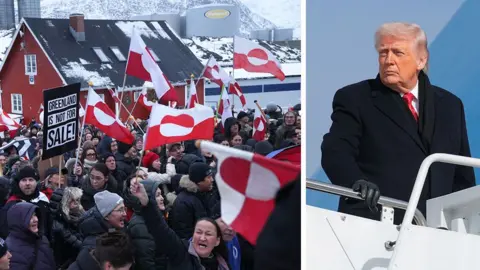
The last fortnight has seen a dramatic escalation in rhetoric from President Trump regarding Greenland, with threats of military action and claims of ownership confusing allies and causing unrest within NATO.
The controversy erupted following a military intervention in Venezuela that seemed to embolden Trump. Diplomatic relations with allies took a hit as Europe faced tariffs, amid his aggressive stance on Greenland.
However, amidst increasing tensions, NATO Secretary General Mark Rutte managed to alleviate some of the crisis, guiding discussions back toward cooperation.
Recent talks included a visit from Danish and Greenlandic foreign ministers, where they agreed on the creation of a working group to discuss Greenland's future, a step welcomed by members of NATO eager to maintain unity.
Discussions hinted at a potential arrangement for the U.S. to build military bases in Greenland, reminiscent of the UK's sovereignty arrangements in Cyprus. While the details remain unclear, such a move would increase American military presence in the Arctic region, a point of contention amid fears of Russian and Chinese influences.
Moreover, Trump's claims regarding access to Greenland's mineral resources have not been officially confirmed by either Denmark or NATO, yet they underline a growing concern about military and economic footholds in the Arctic.
As the dust settles from this recent diplomatic storm, it is evident that the ramifications of Trump's Greenland crisis will linger, leaving many questioning the stability of transatlantic ties and the future of NATO cooperation.