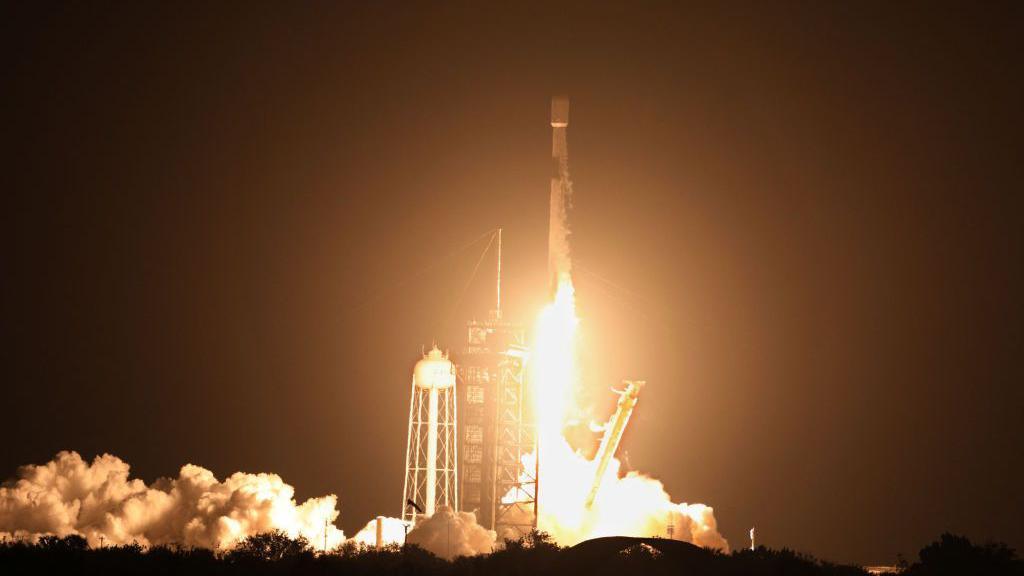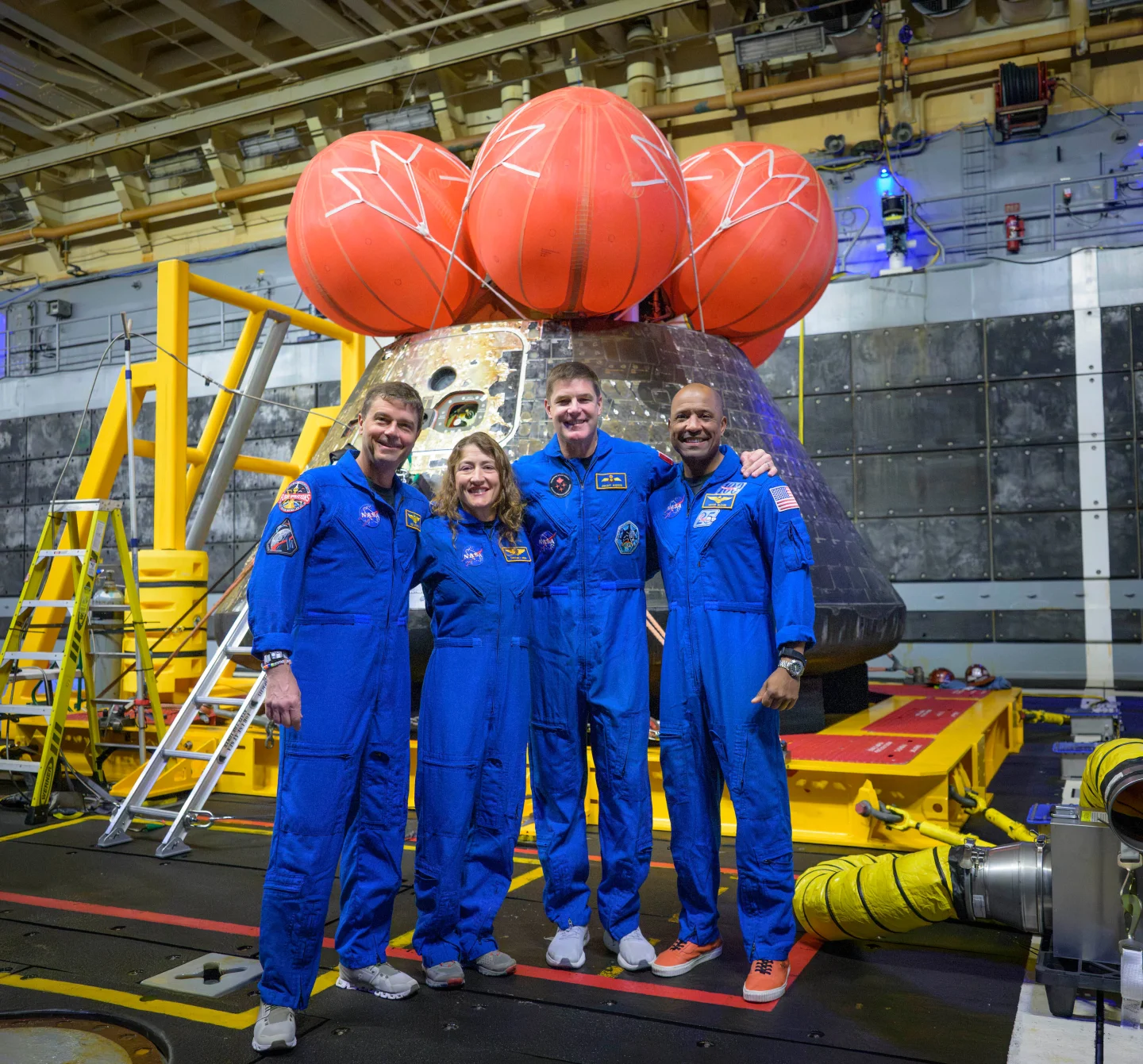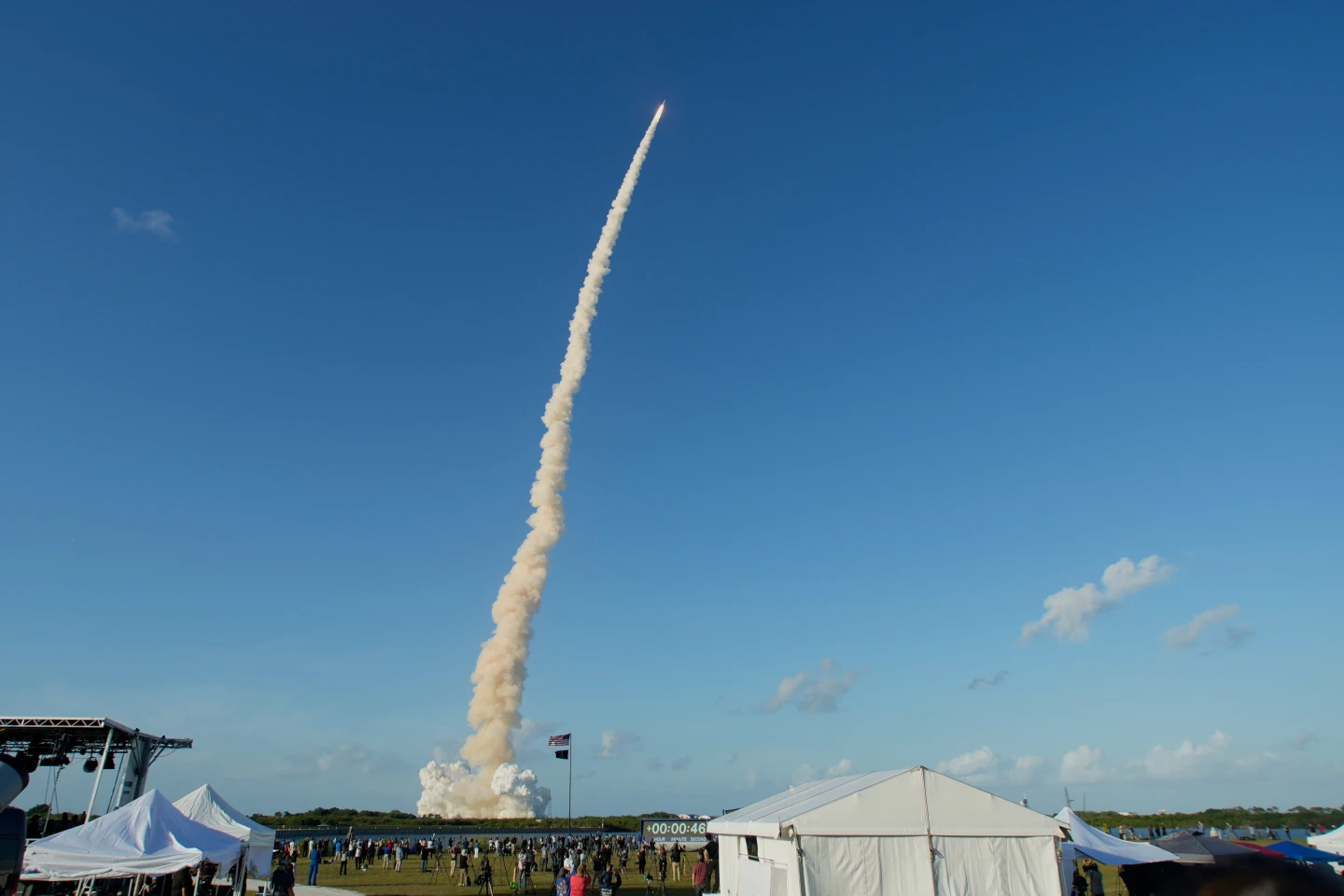
CAPE CANAVERAL, Fla. — NASA’s moonbound astronauts have reason to celebrate, and not just because their launch went smoothly. Their toilet is finally operational.
The lunar loo malfunctioned soon after the Artemis II crew reached orbit on Wednesday evening. Mission Control guided astronaut Christina Koch through some troubleshooting, and she was eventually able to get the system working again.
Unfortunately, it’s quite chilly inside the Orion capsule at 65 degrees Fahrenheit (18 degrees Celsius), prompting the four astronauts to dig through their suitcases for warmer clothing as Mission Control works to adjust the temperature.
The crew, which includes three Americans and one Canadian, is poised to break free of Earth's orbit on Thursday night, setting their course for a lunar fly-around — a significant milestone as it marks Mission Control's first translunar injection since Apollo 17 in 1972.
Until then, the astronauts are enjoying breathtaking views of Earth from their vantage point thousands of miles away. Koch, with her background as a researcher in Antarctica, expressed excitement over the view, noting the visibility of entire coastlines and even the South Pole.
“It is just absolutely phenomenal,” radioed Koch, who previously spent a year working at an Antarctic research station before her career at NASA.
The mission is set to conclude with a Pacific splashdown on April 10, 2024. NASA anticipates this test flight will serve as a launching point for the entire Artemis program, aiming for a moon landing by 2028, although it’s clear that the Orion toilet could use a few design enhancements before then.
The lone toilet is located on the capsule floor, designed with a door and curtain for privacy. It is based on an experimental model that previously launched to the International Space Station in 2020, which had seen minimal use and remained out of service for years.
Dubbed the universal waste management system, this compact toilet operates using air suction instead of water and gravity, similar to older space toilets, with improvements for accommodating female astronauts.
Before the toilet was functional, Koch and her crew had to resort to an improvised bag and funnel system for urinating.
For context, any working toilet is preferable to no toilet, especially when compared to the experiences of the six surviving Apollo astronauts, who faced the limitations of their capsules during lunar missions. Apollo crews had to utilize bags to relieve themselves, which were later adapted as backup systems during space shuttle flights.