In brief
NASA has rolled its Artemis II Moon rocket back to the launch pad after resolving previous helium system issues. Standing at 98 meters tall, the SLS rocket is now set for final tests before a potential launch in early April. This mission will send astronauts around the Moon and is part of a broader initiative to return humans to lunar exploration.
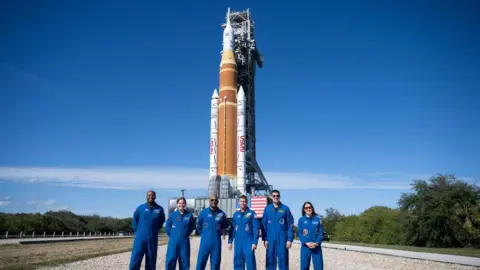
NASA is once again rolling out its giant Moon rocket to the launch pad ahead of the Artemis II mission, which intends to send astronauts around the Moon, a feat not attempted for over 50 years. This rocket, measuring 98 meters in height and composed of the Space Launch System (SLS) and Orion spacecraft, is making the four-mile journey from its assembly building to Pad 39B at the Kennedy Space Center in Florida.The recent movement comes after previously encountering a helium system malfunction that led to the cancellation of a March launch attempt. Engineers have reported that the issue has now been resolved, and they are hopeful that a series of final tests at the pad will confirm the rocket's readiness for an early-April launch window.As night fell, the SLS emerged from the Vehicle Assembly Building (VAB), making its way slowly toward the Atlantic coast, where it will stand ready for its crucial tests. The massive launch vehicle, which outweighs 5,000 tonnes and is taller than Big Ben, is being transported by the Crawler-Transporter-2, which has been designed to carry heavy rockets at a maximum speed of 1 mph (1.6 km/h) to avoid stressing the vehicle.Once at the pad, engineers will ensure that the repairs conducted in the VAB have been successful and no issues arose during the transport. The crew for the Artemis II mission, which includes Reid Wiseman, Victor Glover, Christina Koch, and Jeremy Hansen, is currently in preflight quarantine, preparing for various essential prelaunch activities. The first opportunity for launch is targeted for April 1, with additional windows available on the following days if necessary. If successful, Artemis II will pave the way for future crewed Moon missions as part of NASA's broader Artemis program.