
In brief
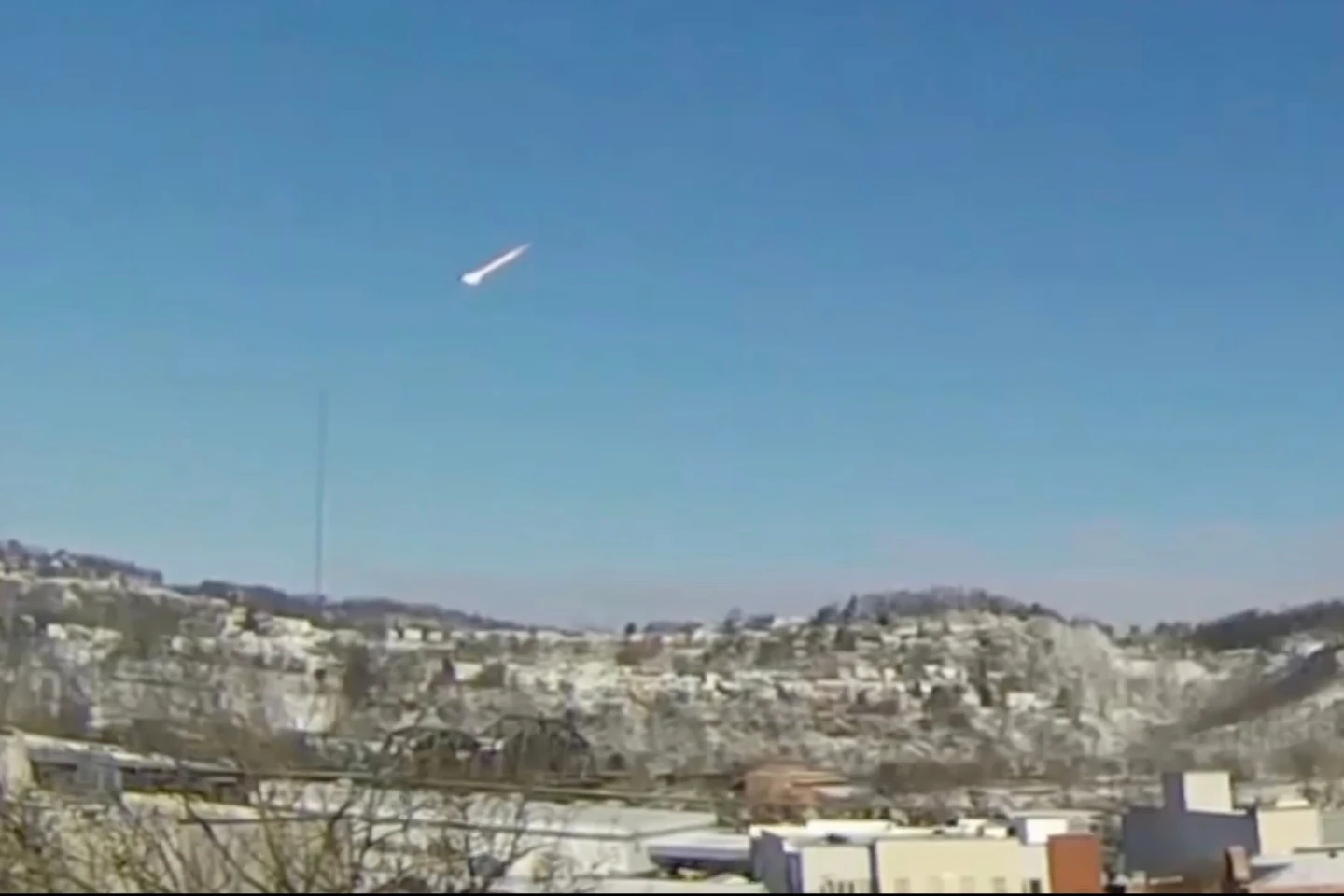
On a Tuesday morning, a colossal 7-ton meteor, traveling at 45,000 miles per hour, shot through the skies of Cleveland, Ohio. Witnesses from Wisconsin to Maryland reported seeing the impressive fireball, which NASA confirmed was nearly 6 feet in diameter. The meteor's explosion unleashed energy equivalent to 250 tons of TNT, startling residents and causing vibrations felt by the National Weather Service staff. Although fragments may exist, much of the meteor likely disintegrated upon entering the atmosphere.
CLEVELAND, Ohio (AP) — A 7-ton meteor that sped across the Cleveland sky at 45,000 miles (72,420 kilometers) per hour on Tuesday before breaking apart in a thunderous boom startled residents who feared an explosion.
People several states away reported seeing the bright fireball even though it was 9 a.m. The American Meteor Society noted sightings from Wisconsin to Maryland. NASA later confirmed that it was a meteor nearly 6 feet (1.83 meters) in diameter.
“This one really does look like it’s a fireball, which means it’s a meteorite -- a small asteroid,” said astronomer Carl Hergenrother, the group's executive director.
“So much stuff is being launched that a lot of times what you see burning up is just reentering satellites. But usually, those don’t get especially bright,” he added.
The meteor was first spotted about 50 miles above Lake Erie, near Lorain. It traveled more than 34 miles (55 kilometers) through the upper atmosphere before fragmenting over Valley City, north of Medina, as stated by Bill Cooke, who leads NASA’s Meteoroid Environments Office in Huntsville, Alabama.
Upon breaking apart, it released energy equivalent to 250 tons of TNT, which accounted for the booming sound heard across the region. Staff members at the National Weather Service in Cleveland reported feeling the vibrations caused by the explosion, although there were no early reports of debris being recovered.
“There could be some small fragments, but a lot of it would have burned up in the atmosphere,” noted NWS meteorologist Brian Mitchell.
Meteors typically fall somewhere in the U.S. about once a day, while smaller pieces of space dust might fall 10 times every hour, according to Hergenrother. Observing meteors has become more accessible to the public, with new methods of tracking through special cameras and even personal cellphones capturing these celestial events.
“Now we’re seeing them, and there are dozens of videos popping up all the time,” he concluded.
