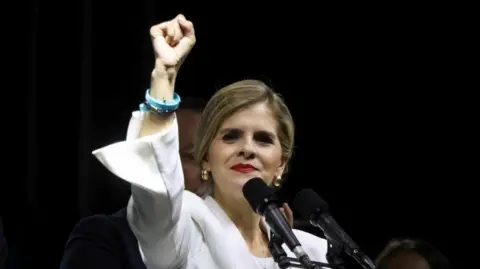
Laura Fernández, the candidate for the governing conservative Sovereign People's Party, has won the presidential election in Costa Rica.
With more than 88% of the votes counted, Fernández had over 48% of the votes, significantly ahead of the second-placed centrist candidate, Álvaro Ramos, who conceded defeat.
Fernández ran on a promise to deepen the tough-on-crime approach of the outgoing President Rodrigo Chaves, having been handpicked by him as his successor. Voters expressed concern about a rise in drug-related violence in the region.
The size of her vote share - which exceeded the 40% needed to win outright in the first round - precludes a run-off election.
Fernández, 39, will be sworn in on May 8. In her victory speech, she stated her commitment to uphold the policies introduced by Chaves, under whom she served as chief of staff.
Under Costa Rican law, presidents cannot serve consecutive terms, thus barring Chaves from seeking re-election. However, Fernández hinted at appointing him to a position in her cabinet.
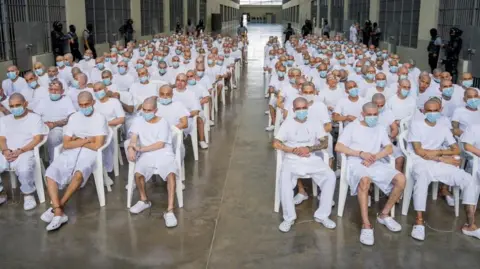
Despite Costa Rica's reputation as one of Central America's safest countries, it has experienced a surge in crime associated with transnational gangs. During her campaign, Fernández indicated plans to emulate some of the policies of El Salvador's President Nayib Bukele, whose tough approach to crime has made waves in the region.
Fernández has said she may declare a state of emergency in areas where gangs hold influence and complete the construction of a high-security facility similar to El Salvador's Cecot prison.
Addressing critics worried about potential erosions of civil rights, she ensured that her administration would focus on dialogue and national harmony, respectful and firmly based in the rule of law. However, she also criticized the opposition for its obstruction and sabotage in implementing policies in parliament, where her party has secured a majority by winning 30 out of 57 seats.
Before running for the presidency, Fernández served as planning minister and held several other government positions, establishing herself as a key political figure closely aligned with Chaves, particularly in maintaining strong ties with the United States.