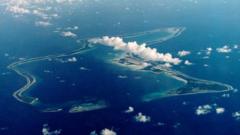
Migrants stranded on the remote military island of Diego Garcia for over three years have finally arrived in the UK. The group, comprised primarily of Sri Lankan Tamils, is permitted to live in the UK for six months with financial assistance from the Foreign Office, as revealed in documents seen by the BBC.
This significant journey signifies the culmination of a lengthy and complex legal struggle, although these migrants' futures are still clouded with uncertainty. The group of around 60 individuals has been living in a makeshift camp on Diego Garcia since October 2021, marking a historic moment as they were the first persons to file asylum claims at this strategic UK-US military base.
A government spokesperson described the relocation as an exceptional one-time case aimed at ensuring their welfare. "This government has inherited a troubling situation that remained unresolved for years under the previous administration," the spokesperson remarked.
Tessa Gregory, a lawyer from Leigh Day representing the Tamils, called the situation a humanitarian crisis that warranted immediate action. "This vulnerable group, including 16 children, has endured 38 months of confinement in squalid conditions," Gregory stated, expressing hope that they could now seek safety and rebuild their lives.
The BBC had earlier gained unprecedented access to the migrant camp on Diego Garcia, where the Tamils had been housed in military tents—many afflicted with leaks and pest infestations. The living conditions led to several hunger strikes and tragic incidents of self-harm among the detainees. Some were even transferred to Rwanda for medical care following incidents in the camp, including reports of sexual assault.
As they arrive in the UK, the Tamils harbor hopes of starting afresh. One individual expressed optimism for their health and future. However, not all members of the group were relocated; two men with criminal records and another under investigation remain on Diego Garcia.
The circumstances surrounding the Chagos Islands, which include Diego Garcia, remain tense, with the UK having announced plans to relinquish control to Mauritius in October. The new Mauritian prime minister has raised objections to the arrangement made by their predecessor, and an independent review has been requested.
UK Foreign Secretary David Lammy has defended this transition, referring to it as a “good deal,” emphasizing its alignment with both the UK's and the US's interests in the region. Despite the financial burden of managing the territory, critics within the UK, including allies of US President-elect Donald Trump, express skepticism about the proposed deal.
In communications received by the Tamils, the Home Office has granted them temporary entry clearance to the UK under exceptional circumstances, clarifying that this does not equal permanent settlement or recognition as refugees. Furthermore, it specified that they would not be allowed to work while in the UK.
Most Tamils have been waiting for decisions on their international protection claims, which the United Nations acknowledges is akin to refugee status. Currently, eight have received international protection, which prevents their return to Sri Lanka. Previous governments had concerns that relocating Tamils could establish a new migration pathway, but assurances have been made to prevent this, including future arrangements to transfer migrants to St Helena, another distant UK territory, once an agreement with Mauritius is finalized.