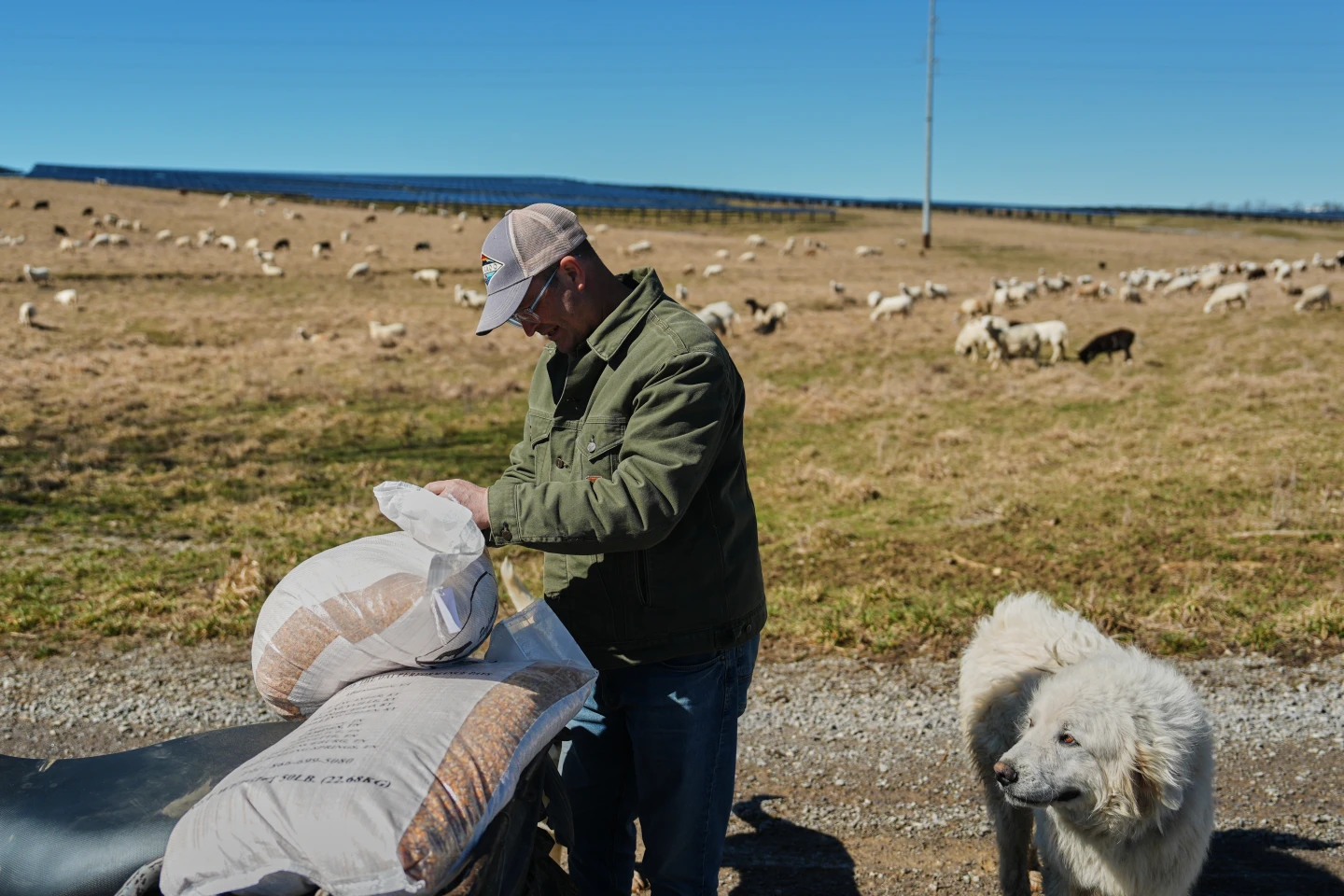
Over the past few years, Kentucky sheep farmer Daniel Bell has been expanding his flock, and that meant he needed to build a new barn. His land is far from the power lines he’d need to heat it, so he figured rooftop solar would be ideal.
To help pay for it, he wanted to apply for a renewable-energy grant through the Department of Agriculture’s Rural Energy for America Program, or REAP — only to find that the Trump administration had effectively halted grants through the program. Bell said that made it impossible to proceed with the idea on his land.
“For me, it’s just been about freedom. Freedom to lower bills, freedom to control my own assets,” he said.
Many farmers work on the thinnest margins, fighting to stay profitable. Some, looking to cut costs on electricity, turn to the federal government for a little extra cash to help them install solar panels on top of barns, grain elevators, or offices. Others turn to commercial renewable energy leases as both an alternative income stream and a way to put fallow land to work.
Bell, for his part, decided to go a different route: Instead of building on his own property, he’s asked to build two new temporary barns on land owned by a commercial solar operation where he’s paid to graze his sheep beneath solar panels to keep the grass down. If the business approves his request, the barns could draw cheaper power from their operation. But not every farmer has that opportunity.
Within the first year of President Donald Trump’s second term, two federal programs critical to the growth of solar energy production — REAP and the clean energy tax credit — have been rolled back. To document how those policy changes are affecting farmers, The Associated Press and Grist analyzed data on both commercial-scale solar projects and small-scale rural energy development across the country. They found that, so far this fiscal year, the Department of Agriculture hasn’t awarded a dollar in rural energy grants or loan guarantees. Reporters contacted roughly a quarter of the nearly 300 developers that have proposed projects on agricultural land in the last two years and found that they are either preparing their businesses to do future projects without federal support or have already lost millions in investment because of the administration’s new tax credit policies.
With legislative changes stalling projects, farmers have been left unsure of how to navigate the federal landscape, impacting their long-term investments in renewable energy initiatives as they try to sustain their agricultural ventures in a rapidly changing economic environment.