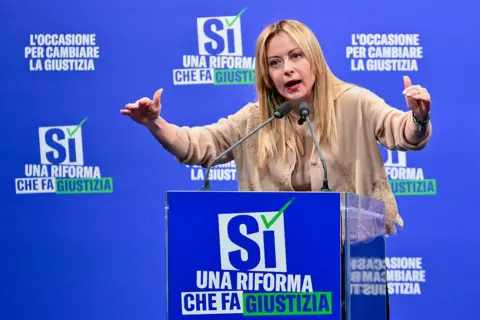
In her push for a yes vote in this weekend's constitutional referendum, Italy's prime minister has been reaching for new audiences.
On Thursday, Giorgia Meloni sat at the mic between a popular rapper and a personal trainer-turned-podcaster to urge Italians to vote for a judicial system she promised would be more just for all.
Opposition parties have been busy too, styling the historic reform proposed by the right-wing government as a threat to democracy, and turning it into a protest vote against Meloni's rule.
In power for three-and-a-half years, close to a record in a land of shaky coalitions, Meloni prides herself on bringing stability to Italy. But as this referendum has become increasingly personalized, she could be facing her first significant defeat.
Political scientist Roberto D'Alimonte explains, She wants to win. If she loses, there will be an impact and she understands that. She needs to mobilise her voters to have a better chance to win this race. But it's going to be touch and go.
That's why the prime minister joined rapper Fedez and Mr Marra on their podcast, Pulp. Swapping her usual one-tone trouser suit for a woolly jumper with sparkles, Meloni fielded questions for an hour from the tattoo-covered rapper and his popular co-host. The engagement was meant to encourage younger voters to the polls.
There is no minimum turnout for this kind of referendum - the camp with the most ballots over two days of voting wins. The no campaign already has the backing of trade unions.
Recent polls suggested that low participation would favour those against the reform. So on air, Meloni set out her case for yes with trademark gusto. She said changes to how Italy's judges and prosecutors work would make the system more meritocratic, more responsible, more efficient. She also argued her opponents were only turning all this into a referendum on her rule because they couldn't fault the reform itself.
In any case, Meloni made clear, she wouldn't be stepping down. If you vote 'no' today just to send Meloni home, you'll find yourself keeping both Meloni and a justice system that doesn't work, the prime minister said, asserting that that doesn't seem like a good deal to me.
The referendum debates ask if Italian justice is really broken. The system is certainly chronically overloaded, but the proposed reform will not directly address this issue. The referendum focuses on separating the career paths of judges and prosecutors, aiming to create distinct governance bodies for them.
The potential impact depends largely on public understanding of the referendum, which many Italians struggle to grasp. Originally proposed by the late Silvio Berlusconi’s party, Forza Italia—which is now part of Meloni's coalition—the reforms have sparked debate about their implications for judicial independence.
Critics, including opposition parties and various public figures, worry Meloni's true aim is to exert political control over the judiciary. Supporters of the reform argue it would enhance independence and accountability within the judicial system.
Ultimately, while Meloni is expected to survive a no vote, a defeat could weaken the perceived stability she's brought to Italy during her term, especially as her government faces the backdrop of rising prices and geopolitical tensions.