[ "WASHINGTON (AP) – In a sign that the American economic mood may not be riding the same trajectory as Wall Street, the Conference Board’s consumer‑confidence index slipped 0.7 points to 93.1 in May, ending a streak of three straight gains. The decline comes as motorists spend more and grocery prices climb, while the equity market forgoes a quarter‑year record haul.
The number is still only a fraction of pre‑COVID wins – the index barely touches 130, the benchmarks it routinely hit before 2020 – but the dip is the first in three months and underscores gaps in the economic recovery. Meanwhile the University of Michigan’s consumer‑sentiment gauge posted a 44.8 reading last month, a record low and the third decline in a row.
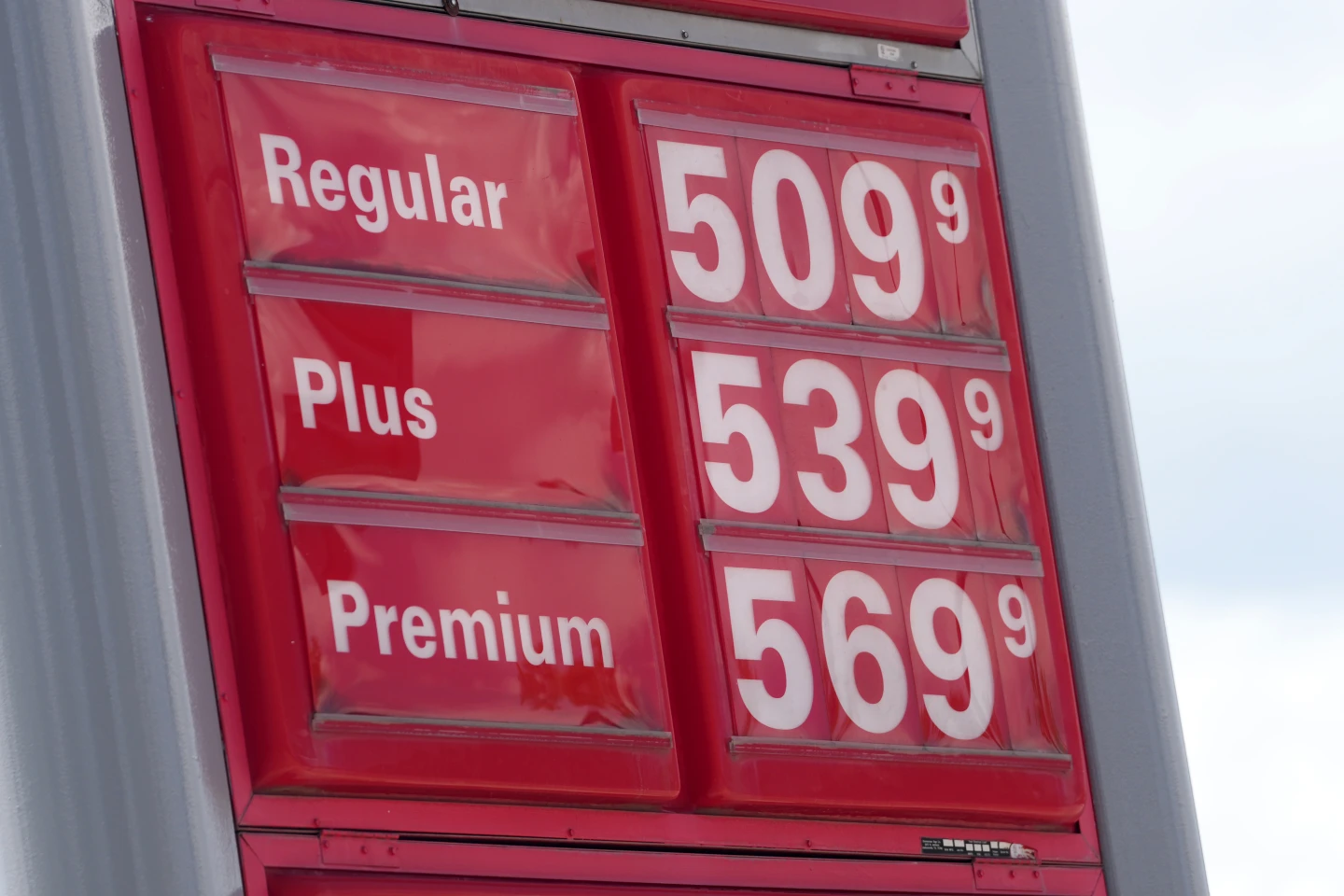
The pressure is palpable. Gas prices have spiked to an average of $4.49 a gallon nationally, climbing from $2.98 just before the Iranian–U.S. tensions that erupted in February. Few have seen a price this high outside the eyes of the rich or the abroad, yet for many the price is a paycheck‑squeezin’ reality.
It is a dual‑shock reality. On Wall Street, shares are on an almost five‑month surge, with the S&P 500 and Nasdaq posting gains that would normally cross the financial curriculum’s righteous line of meaning for household optimism. On the home front, meanwhile, several factors depress the average buyer’s sense of security.
According to the Conference Board, rising prices have nudged most respondents into fewer purchases. Two‑thirds of those surveyed said they cut back overall spending, postponing essential or discretionary buys – ranging from automobiles to clothing, from tractors to toys.
In the newest fiscal draft of the consumer confidence survey, 79% of respondents said they expect paying more in the next two‑quarters. Yet the tenth slowly rose, suggesting that more households “could do it if the war with Iran were over.”
Meanwhile job sentiment has slipped, too. Reuters found that last month, 25.5% of respondents said there’s plentiful labour, the lowest level in three years, while just 18.6% said it was hard to get a job – the smallest percentage since October 2023. This near‑cold “low‑hire, low‑fire” market leaves those who are unemployed facing sharp logistical hurdles.
The prime drivers are gas and food prices. Alongside rising logistics costs, meat prices, especially beef and cattle, have surged, largely driven by an 18‑month drought and dwindling herds in the West.
In April, Nielsen’s chain‑retail sales data indicates that it’s not just the personal‑budget narrative that’s shifted; the retail sector itself has slowed, kicking a lurch in June growth so impact. Yet the elastic exhausters have not been ruthless on the entire marketplace: the lower‑profit groups remain modestly enthusiastic when 2023 paths begin to shape outside predictions.
No less, among the infinite timeline options we harbour, the link between the steamer’s boosting of a photo clinical twin debate. Republicans are looking at the counting front‑and‑center – the data trail and the need to align numbers for unanimity to wait for the mid‑term intricacy that autumn 2026.
Ken Ayers expects the signs to shift in mid‑year, with inflation falling, supply chain cushioning and a possible drop in gas. Until then the vital bulletin of consumer attitudes might swing toward the dollars moved by weirdly volatile defense. In winter‑time, the number will still be limited if big‑trade flows and tight supply chain support bring inflation down complexly.
In any case, the explosive rally in equities means that the market’s head is lofty and will be offset by the slowdown in the consumption‑intensity side of the economy. The ongoing “K‑shaped” divergence underscores the stark disconnect that exists between different parts of the American experience, fueling a scenario where consumer confidence takes a real‑auctions route to the bottom line. That uneasy recession is an unlikely receiving text, for the next two questions that continue to deliver contrasts under daily proactive reckless.
(End of article) " ]
The number is still only a fraction of pre‑COVID wins – the index barely touches 130, the benchmarks it routinely hit before 2020 – but the dip is the first in three months and underscores gaps in the economic recovery. Meanwhile the University of Michigan’s consumer‑sentiment gauge posted a 44.8 reading last month, a record low and the third decline in a row.
The pressure is palpable. Gas prices have spiked to an average of $4.49 a gallon nationally, climbing from $2.98 just before the Iranian–U.S. tensions that erupted in February. Few have seen a price this high outside the eyes of the rich or the abroad, yet for many the price is a paycheck‑squeezin’ reality.
It is a dual‑shock reality. On Wall Street, shares are on an almost five‑month surge, with the S&P 500 and Nasdaq posting gains that would normally cross the financial curriculum’s righteous line of meaning for household optimism. On the home front, meanwhile, several factors depress the average buyer’s sense of security.
According to the Conference Board, rising prices have nudged most respondents into fewer purchases. Two‑thirds of those surveyed said they cut back overall spending, postponing essential or discretionary buys – ranging from automobiles to clothing, from tractors to toys.
In the newest fiscal draft of the consumer confidence survey, 79% of respondents said they expect paying more in the next two‑quarters. Yet the tenth slowly rose, suggesting that more households “could do it if the war with Iran were over.”
Meanwhile job sentiment has slipped, too. Reuters found that last month, 25.5% of respondents said there’s plentiful labour, the lowest level in three years, while just 18.6% said it was hard to get a job – the smallest percentage since October 2023. This near‑cold “low‑hire, low‑fire” market leaves those who are unemployed facing sharp logistical hurdles.
The prime drivers are gas and food prices. Alongside rising logistics costs, meat prices, especially beef and cattle, have surged, largely driven by an 18‑month drought and dwindling herds in the West.
In April, Nielsen’s chain‑retail sales data indicates that it’s not just the personal‑budget narrative that’s shifted; the retail sector itself has slowed, kicking a lurch in June growth so impact. Yet the elastic exhausters have not been ruthless on the entire marketplace: the lower‑profit groups remain modestly enthusiastic when 2023 paths begin to shape outside predictions.
No less, among the infinite timeline options we harbour, the link between the steamer’s boosting of a photo clinical twin debate. Republicans are looking at the counting front‑and‑center – the data trail and the need to align numbers for unanimity to wait for the mid‑term intricacy that autumn 2026.
Ken Ayers expects the signs to shift in mid‑year, with inflation falling, supply chain cushioning and a possible drop in gas. Until then the vital bulletin of consumer attitudes might swing toward the dollars moved by weirdly volatile defense. In winter‑time, the number will still be limited if big‑trade flows and tight supply chain support bring inflation down complexly.
In any case, the explosive rally in equities means that the market’s head is lofty and will be offset by the slowdown in the consumption‑intensity side of the economy. The ongoing “K‑shaped” divergence underscores the stark disconnect that exists between different parts of the American experience, fueling a scenario where consumer confidence takes a real‑auctions route to the bottom line. That uneasy recession is an unlikely receiving text, for the next two questions that continue to deliver contrasts under daily proactive reckless.
(End of article) " ]