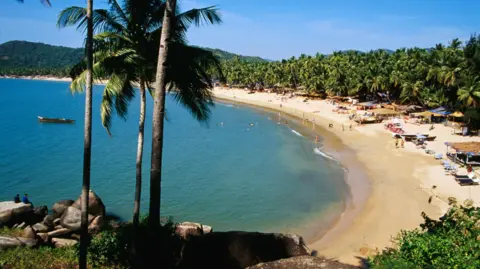
At the picturesque Palolem beach in Goa, while the sun blazes down, an influx of tourists enjoys the surf, yet there is a poignant lack of familiar faces from Europe and Russia who used to flock here. Instead, the demographic reflects a growing trend of domestic visitors as foreign tourism diminishes, raising questions about the state's future as a travel destination.
Recent statistics from Goa's tourism office show a stark decline in foreign tourists visiting since the highs of nearly 900,000 in 2017 to approximately 500,000 in 2025. The rise of local tourism, climbing from 6.8 million in 2016 to over 10 million last year, starkly contrasts the dwindling presence of overseas visitors.
Geopolitical challenges, coupled with economic factors like inflation and rising flight costs due to international conflicts, play a significant role in this decline. Rohan Khaunte, Goa's tourism minister, acknowledges the precarious situation and the need for a strategic approach in light of global uncertainties.
Further, lengthy and complicated visa processes, increased costs for long-term visas, and cancellations of direct flights from major cities like London to Goa aggravate the drop in international attendance. Many travelers are pivoting towards cheaper, more accessible destinations like Turkey and Egypt, which offer competitive pricing amid rising costs elsewhere.
Ernest Dias from the Department of Tourism suggests that foreign tourists are opting for other Asian countries like Vietnam and Sri Lanka, which provide not only lower costs but also more welcoming visa policies. The shift indicates a pressing issue for Goa’s tourism sector, which must grapple with maintaining its appeal in a competitive landscape.
While local visitors boost the economy, they tend to stay shorter and have different spending habits, favoring full-board vacations over the excursions that often characterize foreign travelers' experiences. Dias highlights that this distinction has significant effects on local businesses, which prefer the longer stays and diverse spending patterns of international guests.
Restoration of Goa's former allure will require a comprehensive reevaluation of current tourism offerings, cleaning up littered public spaces, improving transport options, and reducing taxes, something that appears to be slowly recognized by local authorities.
As Goa seeks to revitalize its international tourism market, building connections with Asia and Africa appears to be integral to its recovery strategy. With the rise of new competitors on the horizon, reclaiming its status as a premier destination will demand innovation and determination.