In brief
In a significant escalation of political repression, Tunisia has sentenced dozens of opposition leaders and figures, including Jawahar Ben Mbarek, to prison terms ranging from four to 45 years. Human rights organizations have condemned the trials as politically motivated, amidst a crackdown on dissent by President Kais Saied since 2021. The severe sentences follow widespread protests over perceived authoritarian governance, further aggravating the nation's political crisis.
A Tunisian court has handed jail terms to dozens of opposition leaders, lawyers, and businessmen accused of attempting to overthrow the nation's president.
Forty people, including opposition leader Jawahar Ben Mbarek, have received sentences ranging from four to 45 years over the alleged conspiracy to oust President Kais Saied.
Twenty of those charged fled abroad and were sentenced in absentia, while others have remained in detention since a crackdown in 2023.
Human rights groups have criticized the trial as politically motivated, characterizing the prosecution as part of Saied's ongoing crackdown on dissent since he suspended Tunisia's parliament in 2021 and began ruling by decree.
Tunisian authorities argue that the defendants, including former head of intelligence Kamel Guizani, attempted to destabilize the country and topple President Saied.
Prominent opposition figures, including Ben Mbarek, who received a 20-year sentence alongside party leaders Issam Chebbi and Ghazi Chaouachi, have been in detention since the crackdown.
The maximum sentence, 45 years, was imposed on businessman Kamel Ltaif, while opposition politician Khyam Turki received a 35-year term.
Ben Mbarek has been on a hunger strike for over a month and is reportedly at risk of death, according to his sister and lawyer.
Some key defendants were sentenced in absentia, including politician Bochra Belhaj Hmida and French philosopher Bernard-Henri Levy.
The final sentences were handed down by an appeals court after the opposition figures received initially lesser sentences in April. Saied had previously labeled them as terrorists.
A lawyer representing the defendants described the trial as a farce aiming to eliminate political opposition.
Human rights organizations have been vocal in their criticism, with Sara Hashash from Amnesty International labeling the sentences as unjust and indicative of the deterioration of Tunisia's justice system.
UN High Commissioner for Human Rights Volker Turk expressed serious concerns regarding the political motivations behind the trial and urged the Tunisian government to refrain from using broad national security legislation to stifle dissent.
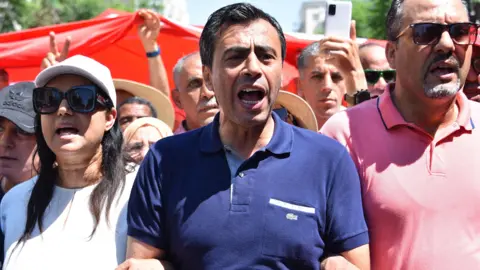
Recently, thousands protested in the capital, Tunis, accusing President Saied of consolidating power through the judiciary and police.
Since his election in 2019 following the Arab Spring uprising, Tunisia has witnessed democratic regression alongside a return to authoritarian governance.