
In brief
Vice-President Teodoro Nguema Obiang Mangue announced that the government resigned following a failure to reach key objectives. Only about 10% of targets were met, prompting concerns over the Prime Minister’s management. The ruling party’s statement accused corruption and stagnation in development projects while noting a lack of diversification in agriculture. President Teodoro Obiang, the world’s longest-serving leader, is expected to appoint a new cabinet. The move underscores the fragile nature of an economy that relies heavily on oil revenues.
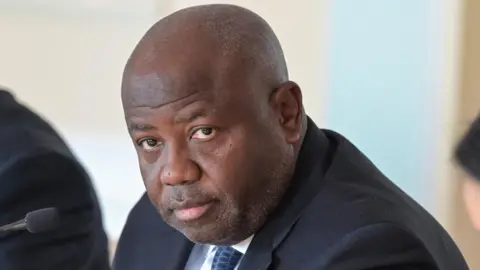
Vice‑President Teodoro Nguema Obiang Mangue, son of the long‑serving President Teodoro Obiang Nguema Mbasogo, confirmed that the entire cabinet resigned yesterday after failing to meet a minimal 10% of its projected targets. The announcement was made via X, with the Vice‑President noting a “principle that responsibility in public management must be accompanied by results.”
The resignation followed a statement by the ruling Democratic Party of Equatorial Guinea, which criticised the Prime Minister Manuel Osa Nsue Nsua and the government’s performance. The party blamed corruption, misuse of state resources for personal gain, and stagnation in the implementation of development projects. It also accused the government of not promoting policies that would diversify the economy, especially in the agricultural sector, thereby maintaining heavy reliance on imported goods.
For context, Equatorial Guinea’s economy is heavily dependent on oil and gas: the sector accounts for the vast majority of exports and revenue. Despite this wealth, the country’s 1.8 million citizens have seen limited benefits; poverty remains widespread and the oil industry has been in decline amid falling production and global demand.
President Obiang, who has ruled since 1979, is known for appointing family members to key government positions. He announced the 2024 government led by Prime Minister Osa Nsua, a move that did not satisfy the ruling party’s expectations. The forthcoming government will aim to reset the country’s development trajectory, but observers note that bespoke reforms will be required to curb corruption and stimulate economic diversification.
AFP via Getty Images


