In brief
Harrison 'Jack' Schmitt, the last scientist on the moon during the Apollo missions, shares insights on the importance of lunar exploration, the potential of helium-3 energy, and the geopolitics of space travel, emphasizing the necessity of preparing for a future beyond Earth.
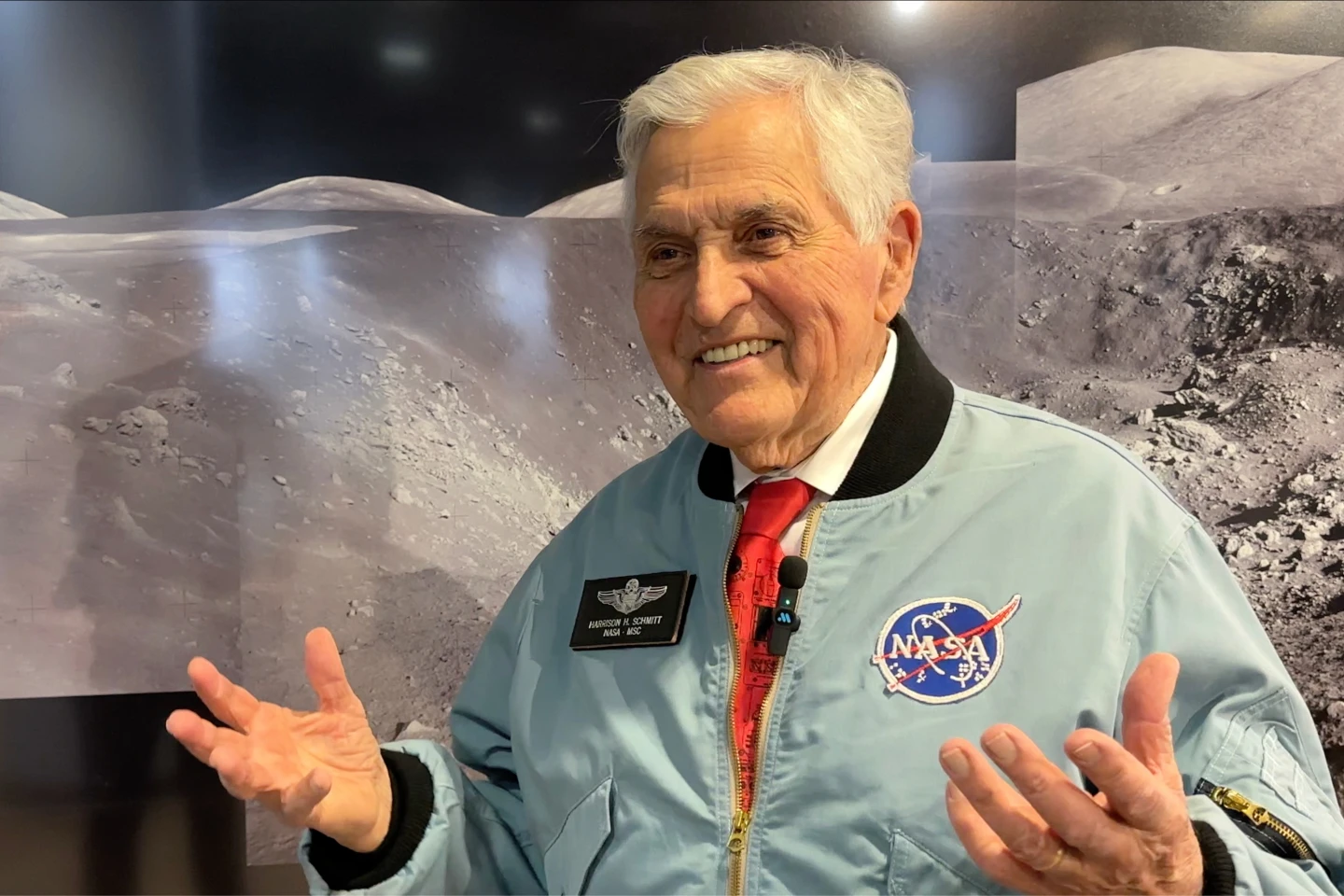
ALBUQUERQUE, N.M. (AP) - In 1972, Apollo astronauts Harrison 'Jack' Schmitt and Eugene Cernan made history by stepping onto the moon’s surface to collect vital rock and soil samples, marking the culmination of America’s lunar exploration program. Reflecting on that monumental moment, Schmitt, now 90 and one of the last surviving Apollo moonwalkers, conveyed a vision for future generations:
“Let’s see them leave footsteps like these someday,” he urged to the world while communicating with Mission Control.
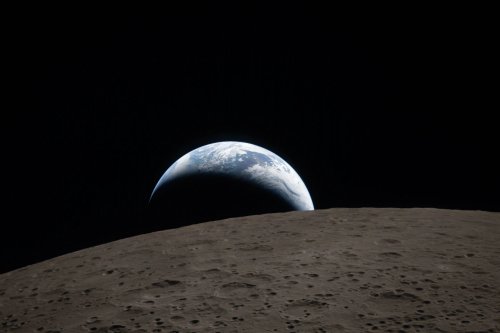
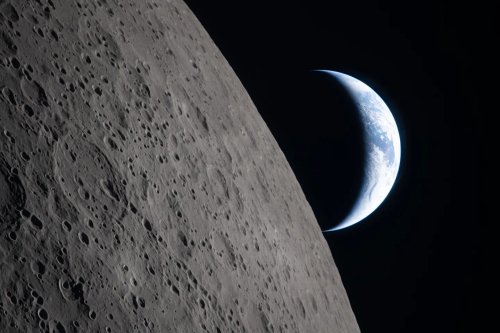
Recently, Schmitt experienced a renewed sense of excitement as he watched the Artemis II crew embark on a historic lunar flyby. In a recent interview, he expressed hope for new generations to return to the moon and beyond, emphasizing the need for a lunar base that could serve as a launching point for missions to Mars.
The Lunar Base: A New Chapter in Space Exploration
Schmitt advocates for establishing a lunar base, citing geopolitical and practical advantages in space exploration. He believes that the moon holds crucial resources, potentially making Mars missions more feasible and beneficial for astronauts seeking to gain experience in deep space.
Understanding our Cosmic History
With the knowledge gained during Apollo 17, Schmitt explained how the moon is a historical archive, offering insights into the solar system’s evolution over 4.5 billion years. He highlighted the importance of studying lunar samples to understand not just our cosmic neighbors but also the origins of Earth’s life.
The Promise of Helium-3
Focusing on the moon's resources, Schmitt discussed the significance of helium-3, a rare isotope poised to revolutionize energy production on Earth. With the potential for clean nuclear power without waste, helium-3 captures the interest of nations engaged in a modern space race, particularly against China.
The Future of Space Exploration
Schmitt’s enthusiasm extends to the possibility of living on the moon and venturing to Mars. He acknowledges challenges such as radiation protection but is optimistic about technological advancements enabling human habitation beyond Earth.
Extraterrestrial Life: A Plausible Mystery
On the topic of unidentified flying objects (UFOs), Schmitt remarked on the vastness of the universe, suggesting that while life may exist on other planets, tangible evidence of such interactions remains elusive.
As Schmitt looks forward, his reflections on the past fuel his belief in the potential of space exploration, igniting a passion in younger generations to explore the cosmos.