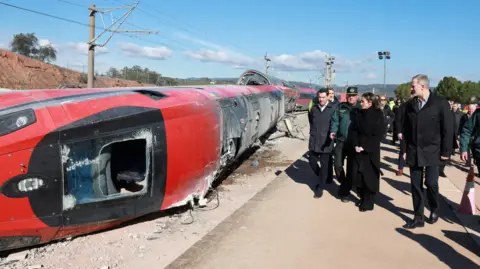
The devastating train crash that occurred on Sunday, the worst rail disaster in Spain over the past decade, has resulted in a tragic loss of at least 42 lives, igniting a crisis for the country.
The incident has left the southern town of Adamuz in shock, leading to widespread questions about what could have led to such a catastrophic failure in one of Europe's most renowned rail networks. The CIAF rail investigatory commission has initiated a thorough analysis of the crash.
A train traveling north from Málaga collided with an oncoming vehicle on a previously efficient route, raising concerns among officials, who described the accident as “extremely strange.”
The clean-up operation is ongoing, with authorities recovering additional victims from the wreckage, compounding the grief felt throughout the nation.
Spain's high-speed rail system has historically been viewed as a symbol of modernization since its inception in the early '90s, but this tragedy has exposed potential vulnerabilities in its infrastructure and safety protocols. Investigators are focusing on the train and the track, with growing scrutiny on a broken section of the line where the derailment happened.
Authorities emphasize that human error is not suspected as the cause, as both trains were reportedly operating within safe speed limits, leaving the condition of the tracks and mechanical failures as potential culprits.
Prime Minister Pedro Sánchez visited the site of the accident and declared three days of national mourning, ensuring that once the full investigation yields answers, the results will be shared transparently with the public. This event not only impacts the victims and their families but has significant implications for the future of Spain's transport infrastructure.