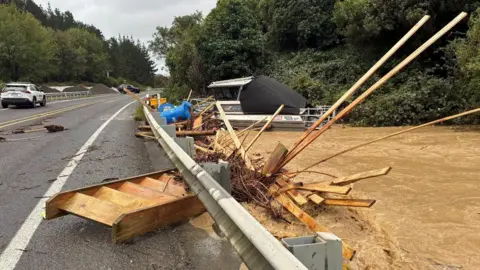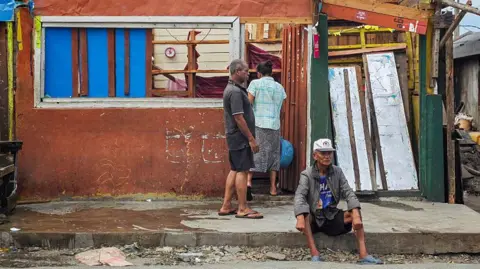
At least 31 people have died after a powerful cyclone struck Madagascar, according to the disaster authority on the island. Cyclone Gezani made landfall on Tuesday, hitting the main port of Toamasina. Madagascar's disaster management office described the situation as 'total chaos' as houses collapsed in the impact zone where bodies were recovered.
Power lines snapped, plunging neighborhoods into darkness, trees were uprooted, and roofs were torn off by the cyclone's ferocity. Colonel Michael Randrianirina, Madagascar's military leader, characterized the disaster stating, nearly 75% of the city of Toamasina was destroyed.
As the chaos unfolded, Randrianirina emphasized the urgent need for external assistance, adding, The current situation exceeds Madagascar's capabilities alone. The cyclone is reported to be one of the most intense to hit the region in the past several decades, with winds reaching up to 250 km/hour (155 mph).
The National Office for Risk and Disaster Management confirmed that many of the casualties occurred as a result of house collapses. 90% of house roofs have been damaged significantly, according to Rija Randrianarisoa, head of disaster management at Action Against Hunger. In response, emergency crews have evacuated hundreds of residents and tended to dozens of injured individuals.
Local residents described harrowing scenes, with one man stating, I have never experienced winds this violent... The doors and windows are made of metal, but they are being violently shaken.
This is the second cyclone to impact Madagascar this year, following Tropical Cyclone Fytia, which killed 14 and displaced over 31,000 people just ten days earlier. In anticipation of Gezani's arrival, schools were closed and emergency shelters were established. By Wednesday morning, meteorological reports indicated that Gezani had weakened and moved inland, about 100 km north of the capital, Antananarivo.
Cyclone season in the Indian Ocean around Madagascar typically lasts from November to April and usually results in numerous storms each year.