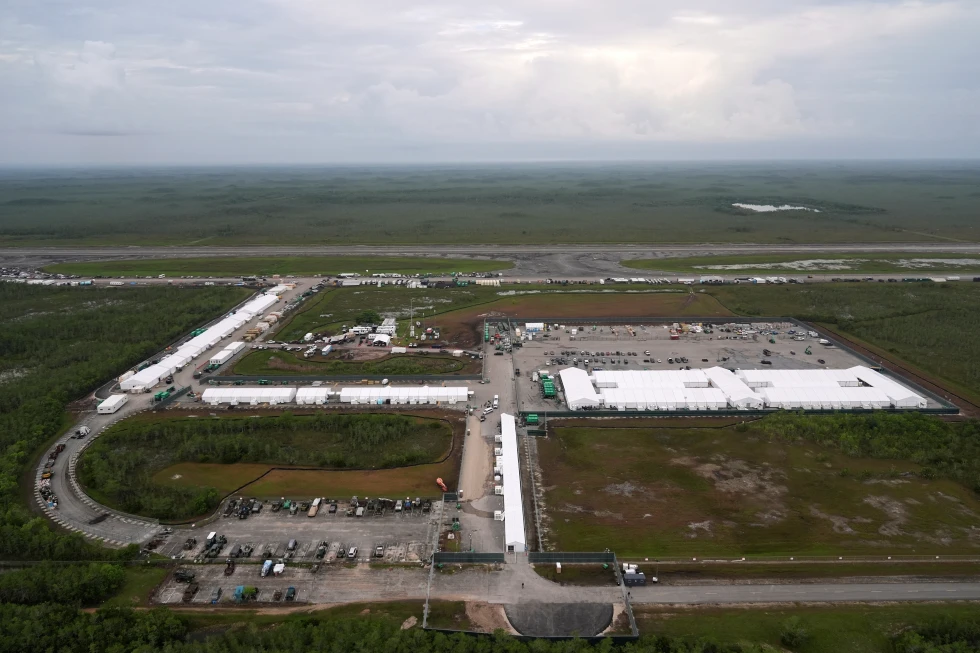
MIAMI (AP) — Felipe Hernandez Espinosa spent 45 days at an immigration holding center known colloquially as Alligator Alcatraz, where detainees report dire conditions, including worms in their food and overflowing sewage. After moving to the Fort Bliss Army base in El Paso, Texas, Hernandez, a 34-year-old asylum seeker, found himself facing similar issues.
Following a grueling five-month wait for his hearing, he feels abandoned in a system where judges are reluctant to release detainees as deportation cases languish in overloaded courts. I came to this country thinking they would help me, and I’ve been detained for six months without having committed a crime, he expressed during a phone interview from detention.
The prolonged detention of migrants has become increasingly common, with over 7,000 people held for more than six months. Critics cite the Trump administration's policies as contributing to the backlog and despair felt by many detainees like Hernandez.
Frustration mounts as follow-ups on cases often yield little progress. Legal advocates express concern at the treatment of those seeking asylum, pointing out that many feel they have no choice but to give up hope of remaining in the U.S.
In light of the increasing number of detainees, many are questioning the ethics of holding individuals indefinitely while they await legal proceedings, especially when they are also suffering from the poor conditions of various detention centers.
Instead of finding safety, many asylum seekers like Hernandez find themselves in a cycle of despair and uncertainty, with their only option seemingly a return to their home countries, despite the dangers that await them there.