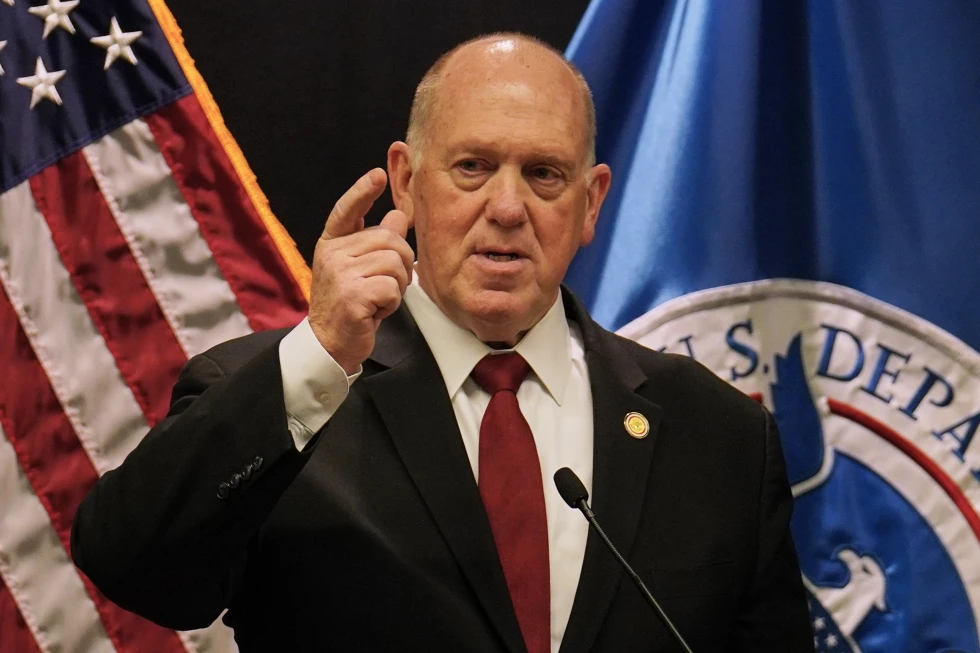
WASHINGTON — A recent move by White House border czar Tom Homan to unify immigration enforcement operations under U.S. Immigration and Customs Enforcement (ICE) in Minnesota underscores escalating tensions within federal agencies. Previously marked by internal strife, the consolidation is part of the Trump administration's broader mass deportation strategy.
Since its establishment in 2003, ICE has generally focused on targeted enforcement—operations aimed at specific individuals—rather than broad, indiscriminate sweeps. Homan emphasized the need to improve coordination within the agency during a conference in Minneapolis, stating that such realignment would provide a better framework for complex enforcement operations.
Despite Homan’s assurances that the restructuring would foster compliance and effectiveness, public sentiment towards ICE continues to decline. A rising number of Americans perceive the agency as overly aggressive, while political pressure mounts on Congress to rein in aggressive tactics associated with immigration enforcement.
The changing dynamics are further complicated by contrasting operational philosophies within ICE and Border Patrol. Critics, including former ICE officials, argue that the Border Patrol's aggressive tactics, which prioritize mass arrests, undermine the investigative approach previously associated with ICE.
Amidst this backdrop, incidents of violence have strained the relationship between agency practices and community trust. Recent fatal encounters involving federal officers have sparked outrage and highlighted the urgent need for reform.
As Homan's new directive shifts the focus back to a more deliberate approach to enforcement, observers remain skeptical about its potential impact amidst ongoing conflicts between these federal entities and the public's growing concern over aggressive immigration policies.