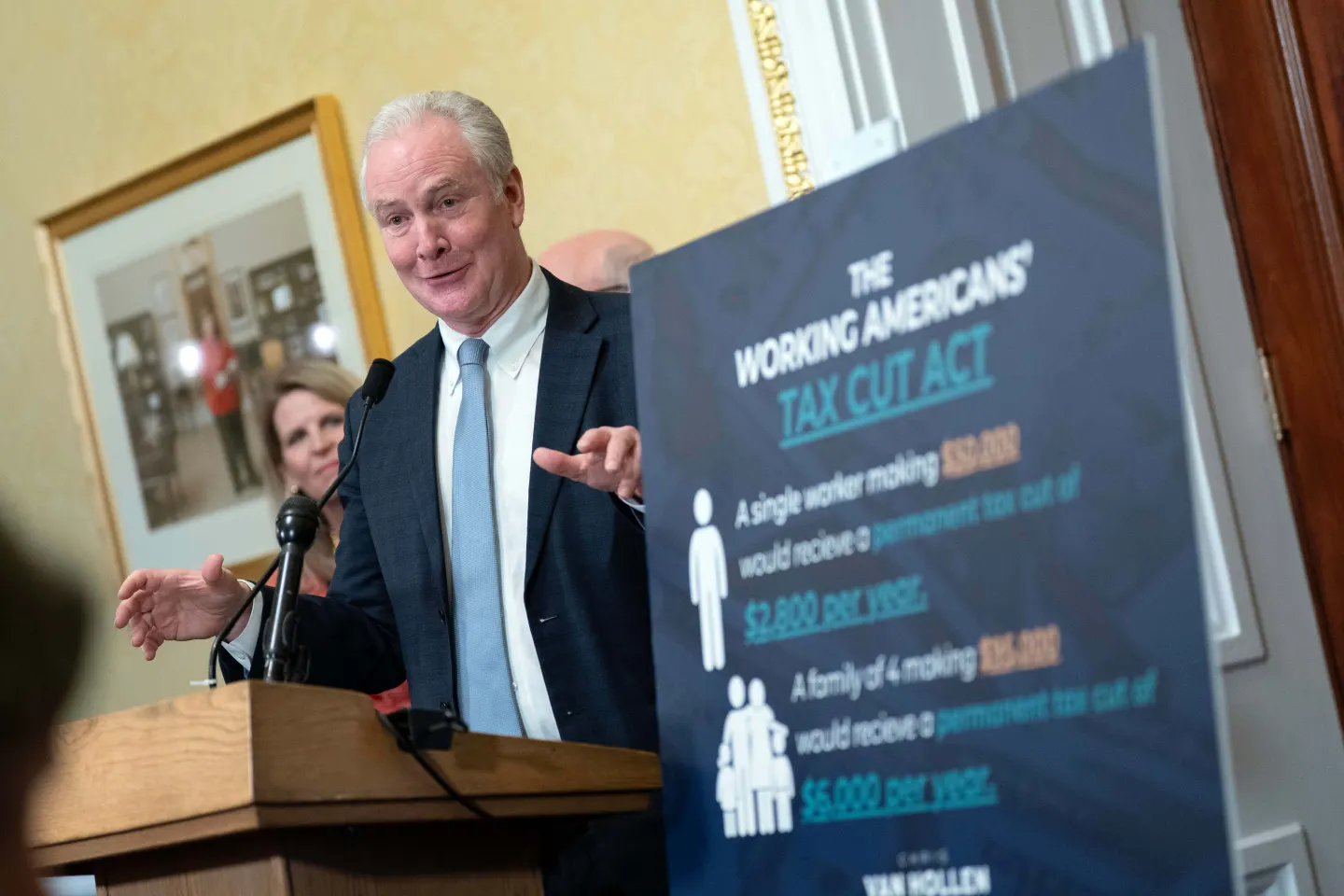
With ongoing voter anxiety about affordability, a faction within the Democratic Party is leaning towards tax reduction strategies typically attributed to Republican platforms. Notably, Maryland Senator Chris Van Hollen is advocating for the elimination of federal income tax for individuals earning $46,000 or less annually, and a reduced rate for those earning up to $60,000. Similarly, New Jersey Senator Cory Booker aims to exempt households from income tax on the first $75,000 of their earnings.
This marks a significant shift as Democrats attempt to reshape their identity by embracing tax cut rhetoric that echoes strategies previously championed by former President Donald Trump, including appealing promises related to taxes on tips and overtime. However, this new approach carries the risk of diverting crucial funding away from other Democratic priorities, such as reversing tax cuts for wealthier individuals or increasing Medicaid support.
Senator Booker counters claims of borrowing from Trump’s playbook, asserting that Democrats must respond boldly to the public demand for more direct and impactful fiscal relief.
The potential tax cuts are not isolated to federal initiatives; state-level proposals are surfacing as well, including former Atlanta Mayor Keisha Lance Bottoms’ plan to exempt public school teachers from state income taxes in her gubernatorial campaign in Georgia.
California Congresswoman Katie Porter echoes this sentiment, urging for tax structure simplifications, advocating for no state income tax for families earning under $100,000. She emphasizes a need for clarity in tax policy to better serve constituents’ needs.
Despite these ambitious proposals, analysts caution that the promised savings for lower-income groups may not be as substantial as hoped, potentially favoring the more affluent rather than providing widespread relief.
The Democratic focus on ultra-wealthy tax increases remains a cornerstone of their platforms, as they embark on this fresh approach to taxation amidst rising deficits. However, the success of these measures hinges on their ability to genuinely alleviate affordability concerns without undermining essential government services.