There were violent clashes between anti-government protesters and security forces in several locations in Iran on Wednesday, as a wave of unrest sparked by the country's economic crisis continued for an 11th day.
Iran's semi-official Fars news agency, which is close to the Revolutionary Guards, reported that two policemen were shot and killed by armed individuals in the south-western town of Lordegan.
Videos circulating on social media showed a tense standoff between protesters and security forces, with the sounds of gunfire echoing in the background. In various locations, security forces were seen firing weapons and tear gas into crowds, while some protesters retaliated by throwing stones.
According to the US-based Human Rights Activist News Agency (HRANA), the protests have spread to 111 cities and towns across all 31 provinces. The agency noted that at least 34 protesters and four security personnel have been killed, with around 2,200 individuals arrested.
The unrest took root on December 28, amidst frustrations over the rapid depreciation of the Iranian rial against the US dollar, leading to widespread discontent about inflation and corruption exacerbated by sanctions related to Iran's nuclear program.
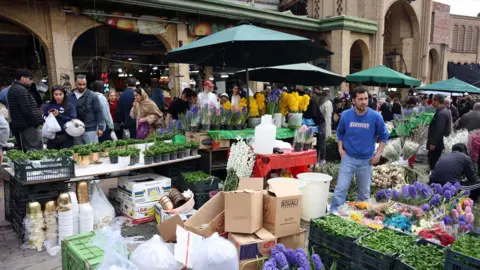
Initial protests led by shopkeepers quickly garnered support from university students, evolving into a larger movement expressing rage against the regime, specifically targeting Supreme Leader Ayatollah Ali Khamenei and even invoking support for the exiled Reza Pahlavi, scion of the overthrown shah.
During protests, demonstrators in various cities, including Aligudarz, Mashhad, and Qazvin, were seen clashing with police forces or chanting slogans such as Death to the dictator and Long live the shah. The government has vowed to differentiate between peaceful protesters and those labeled as rioters as protests continue unabated.
Vice-President Mohammad Jafar Qaempanah remarked that no security measures should be taken against peaceful demonstrators, while judiciary chief Gholamhossein Mohseni Ejei warned of rapid prosecutions for alleged rioters. Despite calls for engagement with the public, Khamenei insisted that any rioting must be met with force.
With international scrutiny and looming threats of intervention, leaders within Iran may be tempering their responses to avoid escalating tensions that could invite foreign intervention, marking a pivotal moment in Iran's ongoing battle against economic hardship and authoritative rule.