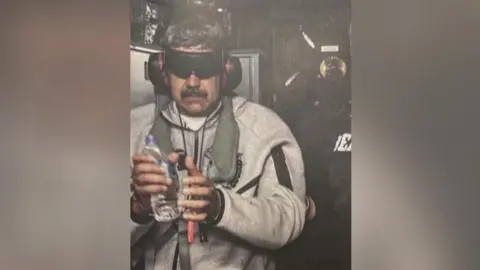
A week on from the dramatic raid that captured Venezuela's Nicolás Maduro, details of the intelligence surrounding the operation are becoming clearer, but some mysteries still remain.
The mission took months of planning and intelligence gathering. In August, the CIA is believed to have sent a team of undercover officers into Venezuela. Operating without a U.S. embassy, the team worked in what intelligence operatives call a denied area, scouting targets and recruiting local contacts.
Key to their success was a source within Maduro's inner circle providing critical information, leading to increased speculation about their identity and current status. All collected data formed a mosaic of intelligence combining human sources with satellite imagery.
The operation's scale, speed, and success have been deemed unprecedented, described by former CIA Latin America Chief of Operations David Fitzgerald as running like clockwork—an outcome highly dependent on accurate intelligence rather than military tactics.
Around 150 aircraft flew the mission, with helicopters navigating dangerously low to reach Maduro’s compound. However, elements of the operation remain unclear, including how U.S. forces managed to temporarily black out Caracas, allowing for a seamless entry.
The involvement of U.S. Cyber Command has sparked debate over whether military hackers infiltrated Venezuelan systems to disable power grids at the opportune moment. Additionally, the failure of Chinese and Russian air defenses raises questions about potential electronic warfare techniques employed by the U.S.
The aftermath of the operation revealed complications; according to the Cuban government, which provided security to Maduro, 32 of its nationals were killed by U.S. forces during the mission. Yet, the effectiveness of Maduro’s security raises further questions about possible complicity from within his regime.
A classified CIA assessment highlighted the benefits of engaging with existing power structures rather than placing exiled opposition figures into power—a strategy affecting the operation's execution. As details slowly emerge, further inquiries into the implications and next steps following Maduro's capture continue to unfold.
The mission took months of planning and intelligence gathering. In August, the CIA is believed to have sent a team of undercover officers into Venezuela. Operating without a U.S. embassy, the team worked in what intelligence operatives call a denied area, scouting targets and recruiting local contacts.
Key to their success was a source within Maduro's inner circle providing critical information, leading to increased speculation about their identity and current status. All collected data formed a mosaic of intelligence combining human sources with satellite imagery.
The operation's scale, speed, and success have been deemed unprecedented, described by former CIA Latin America Chief of Operations David Fitzgerald as running like clockwork—an outcome highly dependent on accurate intelligence rather than military tactics.
Around 150 aircraft flew the mission, with helicopters navigating dangerously low to reach Maduro’s compound. However, elements of the operation remain unclear, including how U.S. forces managed to temporarily black out Caracas, allowing for a seamless entry.
The involvement of U.S. Cyber Command has sparked debate over whether military hackers infiltrated Venezuelan systems to disable power grids at the opportune moment. Additionally, the failure of Chinese and Russian air defenses raises questions about potential electronic warfare techniques employed by the U.S.
The aftermath of the operation revealed complications; according to the Cuban government, which provided security to Maduro, 32 of its nationals were killed by U.S. forces during the mission. Yet, the effectiveness of Maduro’s security raises further questions about possible complicity from within his regime.
A classified CIA assessment highlighted the benefits of engaging with existing power structures rather than placing exiled opposition figures into power—a strategy affecting the operation's execution. As details slowly emerge, further inquiries into the implications and next steps following Maduro's capture continue to unfold.