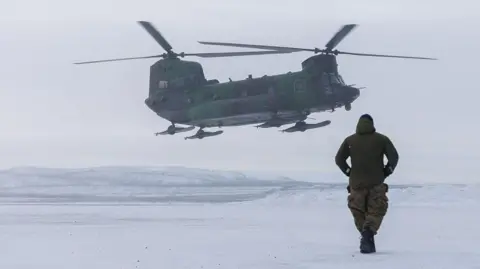
Canada's Arctic spans nearly 4 million square kilometers, yet it remains sparsely populated, presenting challenges for national defense against geopolitical adversaries. Over recent years, the Arctic's strategic importance has surged, especially with increasing military activity from both Russia and the United States. Former Canadian Forces Northern Area commander Pierre Leblanc emphasized the dangers of this vast environment and the inadequate existing defense infrastructure, which includes aging radars and only eight military bases.
In light of these challenges, Prime Minister Mark Carney has pledged to bolster Canada's defense presence in the Arctic, declaring a focus on securing shared prosperity and security in the region. Investments target enhanced radar systems, new aircraft, submarines, and additional military personnel in a bid to address potential adversities, particularly from hypersonic missile advancements.
The Arctic remains a zone of intense geopolitical rivalry, not just between Canada, the US, and Russia, but also with China asserting its claims as a 'near Arctic state.' As concerns about national security expand amidst America's Arctic ambitions—prompted by the Trump administration and its controversial focus on Greenland—Canada is under pressure to assure both its citizens and allies that it is taking adequate measures to safeguard its territorial interests. Experts suggest the need for real action in Arctic defense is now urgent, as technology and military strategies have evolved since the Cold War.
While the path to stronger defense strategies remains fraught with tensions—including strained relations with the U.S. over defense programs—the cooperation between Canadian and American forces in the Arctic continues to be vital. The strategic balance in the region relies on maintaining open communication channels and enhancing shared defense capabilities to effectively respond to emerging threats.