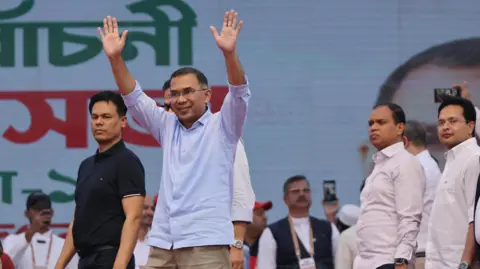
Following an unexpected election outcome, Bangladesh finds itself at a crossroads with the Bangladesh Nationalist Party (BNP) emerging victoriously, and its leader Tarique Rahman poised to assume the role of prime minister for the first time. The recent elections, marked by the absence of the previously ruling Awami League, signal a significant shift in the country’s political dynamics.
Just over two years ago, Prime Minister Sheikh Hasina’s election was widely criticized for being rigged. Now, Rahman, who had returned to Bangladesh after 17 years of self-imposed exile, aims to lead the BNP into a new era. Historically, he inherits a leadership legacy from both his mother, Khaleda Zia, and father, Ziaur Rahman, who were pivotal figures in the country’s politics.
However, Rahman's ascent has not been devoid of controversy. Having faced allegations of corruption and nepotism, he enters the political arena as an untested leader. His candidacy comes at a time when a considerable segment of the population—particularly the youth—cries out for accountability and systemic change.
Political analysts predict that his lack of prior governmental experience could prove beneficial amid rising expectations for reform. As noted by political scientist Navine Murshid, a desire for tangible change has spurred hope among citizens, often weary of past disappointments.
The BNP’s primary focus is to restore democratic processes and rebuild institutions perceived to have deteriorated in recent years. Rahman’s government will need to prioritize restoring law and order while also tackling economic challenges, such as food prices and employment opportunities.
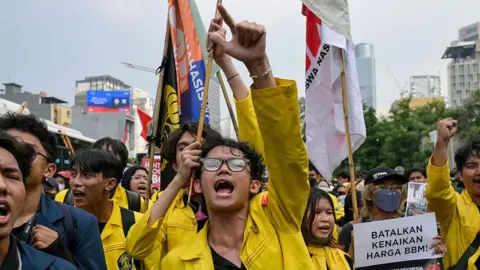
With the nation still reeling from the political upheaval that led to Hasina's ousting, public expectations surrounding Rahman’s administration are high. The younger generation, which significantly participated in the July uprising against Hasina, remains vigilant, expressing a collective desire for genuine socioeconomic progress, unity, and nonviolent governance.
With other political entities like the Islamist Jamaat-e-Islami gaining ground for the first time, the composition of Bangladesh's political landscape is diversifying. As Rahman steps into this complex arena, the potential for significant reform rests on his ability to navigate these turbulent waters effectively and respond to the calls for change resonating throughout the nation.