In brief
The February 2026 Israeli parliamentary election ended with Netanyahu’s right‑wing coalition projected for 53 seats, the opposition 48, and Arab parties a record 19, leaving no majority in the 120‑seat Knesset. Turnout reached 77.7%, the highest since 1999, while Israel’s stock market and shekel fell amid uncertainty. Remaining double‑envelope ballots and coalition negotiations remain unresolved.
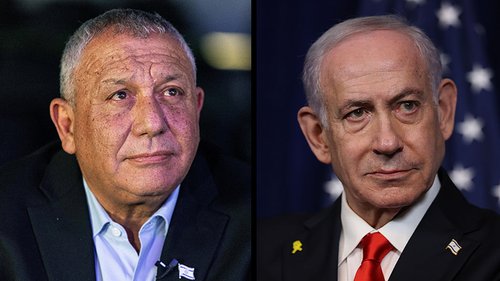
In the 2026 Israeli parliamentary election, no single party or bloc secured the 61 seats needed for a majority, with Netanyahu’s right‑wing coalition projected to win 53 seats, the opposition led by former military chief Gadi Eisenkot 48 seats, and Arab parties a record 19 seats, according to preliminary counts on Thursday, October 28.
Israeli Prime Minister Benjamin Netanyahu’s bloc, built around his Likud party, was expected to secure 26 seats, the most of any single party, while the opposition’s Yashar‑aligned coalition fell short of a governing majority. The Arab bloc, comprising the Joint List and Ra’am, was projected to win 12 and 7 seats respectively, raising the total to 19, a new high for a single bloc in the Knesset. The 120‑seat legislature means that either bloc would need to seek support from outside their core parties to form a government.
The central elections committee reported that nearly 5.7 million of the 7.3 million eligible voters cast ballots, pushing turnout to 77.7%—the highest since the 1999 elections. With roughly 85% of votes counted by Wednesday evening, the final tally, including remaining special double‑envelope ballots for soldiers, diplomats and other absentee voters, is expected by Thursday evening and will be formally published on November 4.
Israel’s market reacted sharply to the partial results. The Tel Aviv Stock Exchange’s benchmark TA‑35 closed down 1.81%, while banks and broader indices fell 2–4% during the session. “The sell‑off was driven by political uncertainty and concerns that another Netanyahu‑led government might again struggle to address economic challenges, particularly the high cost of living,” Gad Lior, a senior analyst at Yedioth Ahronoth, said. Critics also warned that a renewed war with Iran could affect investor sentiment.
Joseph Freiman, CEO of the financial group Prico, noted that shifting election results had reversed the shekel’s earlier gains, with the currency weakening 1.62% against the dollar to 3.128 shekels per dollar in official exchange rates.
Political voices on the day of the vote expressed confidence or frustration with the emerging picture. “The preliminary poll results point to complete distrust in Netanyahu and the government of Oct. 7, of the Zionist majority and the majority of Israeli citizens,” Eisenkot said on social media; “If these are the final results, this is a victory for the statist‑Zionist majority in Israel.” Netanyahu responded that his right‑wing bloc “must establish a strong, right‑wing, national government,” and that Likud was the “largest party in Israel.”
Mansour Abbas, leader of Ra’am, told Israel’s Channel 12 that “with the numbers we have now, there is no government.” He added that both major blocs had approached his party before and after the election, signalling a potential role for Arab parties in any coalition.
Former ambassador Alon Pinkas cautioned that “there’s a price to pay” for parties that refuse to ally with Arab lists, saying the “Arabs can’t be kept outside and only being considered and co‑opted when you need their votes.” His remarks highlight the political stakes of whether the ruling or opposition bloc will eventually seek Arab participation in forming a government.
The state’s President Isaac Herzog will consult party leaders to nominate a prime‑minister candidate with a realistic chance of building a coalition. That candidate has 28 days, with a possible 14‑day extension, to assemble a government. If no coalition is formed, the mandate could pass to another member of parliament or, if necessary, the Knesset may be dissolved and new elections called, with the incumbent cabinet remaining as caretaker.
Uncertainties remain that the sources already highlight: the final distribution of seats may shift as the remaining 500,000 special ballots are counted; the possibility of a coalition that includes Arab parties; and the duration and outcome of the negotiations that will determine whether Netanyahu, Eisenkot or a third candidate will form the next Israeli government.