In brief
Zhang Xuefeng, a prominent education influencer in China, has died of cardiac arrest at just 41 years old, shocking millions who followed his advice on university applications and career choices. His pragmatic yet polarizing views on education, which sparked fervent discussions across social media, are now prompting deeper reflections on the pressures faced by students in China's competitive landscape. As tributes flow in, questions arise about his impact and legacy among China’s youth.
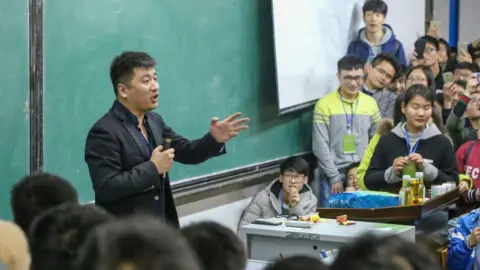
In less than a decade, Zhang Xuefeng became an iconic figure among China's youth, amassing over 26 million followers on Douyin (the Chinese version of TikTok). Known for providing advice on university applications and choosing majors, he sought to help students and parents navigate the complexities of achieving better job prospects in an increasingly challenging job market.Zhang’s practical approach made him a controversial figure, especially after he boldly stated that 'any major is better than journalism' and criticized liberal arts as 'a service industry that caters to others.' His ascent parallels rising concerns in Chinese society, such as a slowing economy and high youth unemployment, triggering debates about the utility of his advice.His unexpected death on Tuesday, following reports of a collapse while exercising, sent shockwaves through social media with the hashtag 'Zhang Xuefeng dies' generating over 600 million views within 24 hours.Supporters hailed him for transforming countless lives, especially for ordinary families lacking resources for educational guidance. In contrast, critics derided his utilitarian take on education as narrow and potentially harmful to societal values. As tributes poured in from major state media and shocked followers, many expressed their sincere gratitude for the clarity and direction his guidance provided.Zhang’s rise was emblematic of aspirations shared by many: achieving success through education in a country where degrees are often viewed as vital for social mobility. Born in 1984 in Heilongjiang province, Zhang began his journey in the tutoring industry amid a boom in university enrollment. His influential lectures and social media presence made complex educational content accessible, thus carving out a unique space in China’s educational discourse.Yet, his provocative statements often led to backlash, particularly from the academic community. Zhang’s experience underscores a critical dialogue on educational values and societal expectations, raising vital questions about the attainment of success in modern Chinese society.As reflections on his legacy continue, Zhang once expressed his desire to be remembered as 'the memory of a generation of Chinese.' With the conversations surrounding his methods reverberating through online forums, many believe his influence will remain in the hearts and minds of students seeking guidance in their careers.