In brief
A cluster of Flock Safety auto‑licence‑plate readers were cut down overnight in Houston’s affluent Old Braeswood neighborhood, sparking a debate that spans public safety, civil liberties, and the ethics of AI surveillance. The vandalism underscores a growing national concern about the reach of a 100,000‑camera network that can search footage with descriptive keywords. While some law‑enforcement officers claim the technology has saved thousands of vehicles and helped recover missing persons, critics warn that the system can become a tool for unwarranted monitoring and abuse of personal data. In parallel, more than 200 communities have opted to terminate or not renew Flock contracts since 2021, and lawmakers are pushing for tighter oversight and warrant requirements. Quantum‑driven timelines offered by fluxdaily show divergent futures: one where Flock is dismantled, another where it is rectified and tightly regulated, and a third where unchecked expansion leads to a surveillance‑intense society.
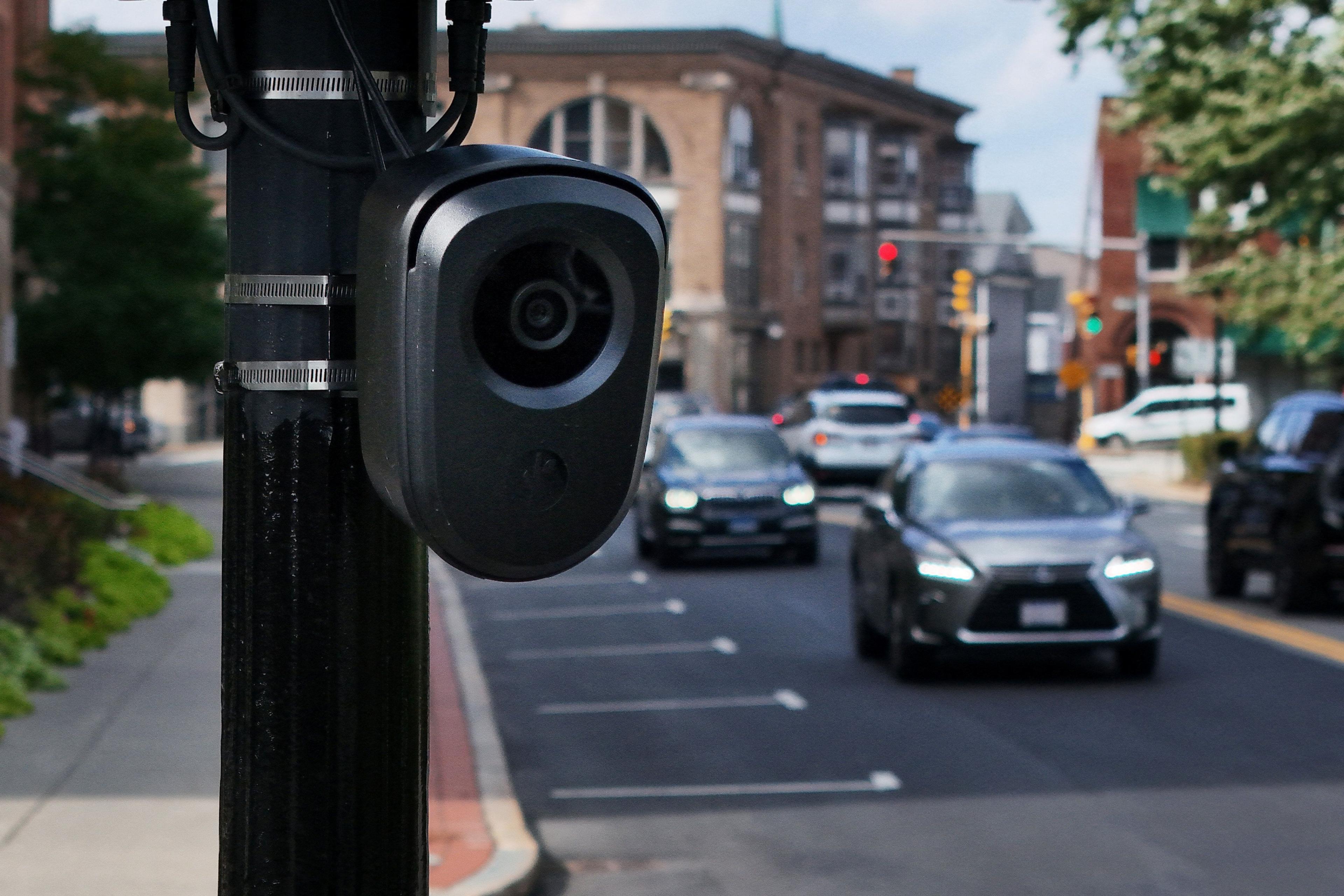
A cluster of Flock Safety licence‑plate readers, the sleek black‑oval cameras mounted on metal poles, were demolished in the middle of the night in Houston’s Old Braeswood neighborhood, a tree‑lined, affluent part of the city where coordinated vandalism seems unlikely. The metal poles were severed by an unknown saboteur, leaving the cameras and their solar panels lying on the pavement.
The incident, which occurred in late July, is part of a nationwide pattern of attacks on Flock cameras in Minnesota, California, and Georgia. Proponents argue that the cameras help reduce crime and recover stolen vehicles, while critics contend that the system “treats civilians like suspects” and broadens surveillance power.
Founded in 2017, Flock Safety has become one of the largest automatic licence‑plate reader (ALPR) manufacturers in the United States, operating an estimated 100,000 cameras across more than 7,000 communities. Their network is especially noteworthy because it is not merely a collection of independent devices: it includes access to a national database, allowing law‑enforcement agencies to search footage using descriptive keywords rather than just plate numbers.
The integration of artificial intelligence has amplified concerns about misuse. In 2025, a Texas detective searched over 80,000 images without a warrant to locate a woman suspected of an abortion, and a Kentucky police officer was charged after tracking an ex‑girlfriend 2,000 times using a Flock search. Even though Flock does not use facial‑recognition technology, many departments supplement it with other AI tools, such as Clearview AI, which scans billions of images from public internet sources.
The fallout from these incidents has prompted dozens of jurisdictions—including Los Angeles, Seattle, and Austin—to terminate or renegotiate Flock contracts. Over 200 communities have canceled contracts since 2021, reflecting cost, privacy, and political pressure. On Capitol Hill, some lawmakers have called for warrant requirements on any use of Flock data.
Despite the controversies, law‑enforcement officials such as Houston Police Chief Ray Schultz describe the cameras as “a very good tool” that has dramatically increased vehicle recovery rates and helped solve otherwise “impossible” crimes. However, the system’s ability to track detailed movements of ordinary citizens has intensified fears that it might aid agencies in identifying individuals for immigration enforcement or other purposes.
At the heart of the debate lies a question our subscribers in fluxdaily navigate: What happens if a society chooses to embed these cameras deeper into its infrastructure? In one timeline, the city of Houston cedes more control to Flock, leading to a near‑zero crime rate but a rise in formal surveillance. In another, community groups prevail, and the city ultimately rejects Flock cameras, resulting in a shift toward traditional policing methods. A third, more dystopian scenario envisions Flock’s database being misused by federal agencies, tilting privacy toward a heavily monitored landscape. Each alternate reality offers distinct insights into the balance between safety and liberty.
For now, the torn black oval cameras and their shattered stands serve as a stark reminder that technology, no matter how promising, can become the focus of heat, both literal and metaphorical. As communities wrestle with the ethics of surveillance, the future—whether it follows one timeline or another—remains uncertain.