A recently discovered large hilltop settlement could challenge the theory that the Vikings built the first towns in Ireland, a researcher has said.
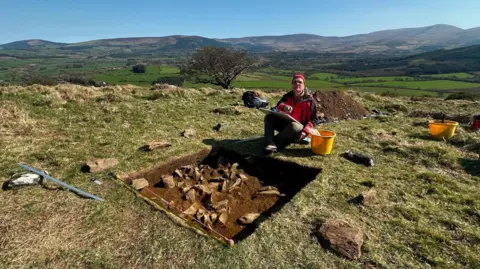
Dr. Dirk Brandherm and his colleagues have identified more than 600 suspected houses in the Brusselstown Ring, making it the largest nucleated settlement discovered in prehistoric Britain and Ireland to date.
The settlement, which is thought to have emerged around 1200 BC during the Late Bronze Age, is located in the Baltinglass Hillfort Cluster in the south-western edge of the Wicklow Mountains.
This site features among 13 large hilltop enclosures spread across the mountain range, with structures dating back to the Neolithic and Early Bronze Age.
The findings, published in Antiquity, emphasize the exceptional size and complexity of the settlement.
Given its exceptional size, density of occupation, and architectural complexity, Brusselstown Ring represents a unique case within both the Baltinglass hillfort cluster and more widely within the Atlantic Archipelago, the study highlights.
Previously, small hamlets (one to five dwellings) formed the assumption of settlement structures, yet the Brusselstown Ring discovery introduces the idea of a proto-town, according to Dr. Brandherm.
With notable features such as a stone-lined water cistern, believed to be a first for Ireland, the settlement indicates sophisticated community practices well before Viking contact.
Future excavations aim to confirm the date of the cistern and further understand the settlement's social structures and dynamics.