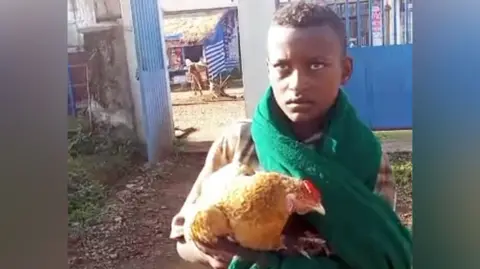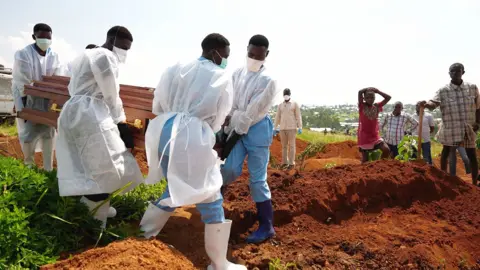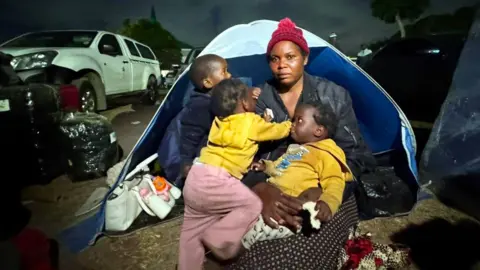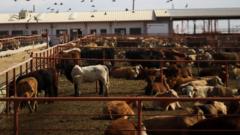
In Nigeria's Plateau State, a violent conflict persists, deeply rooted in ethnic identities, land ownership disputes, and competition for resources, particularly cattle. On a night in April 2025, Joseph Ize Zino recalls hearing gunshots as his village, Zike, was attacked, resulting in 52 deaths and a palpable sense of fear among survivors. The ethnic Fulani, traditionally cattle herders and predominantly Muslim, are often identified as attackers, raising allegations of genocide against Christians in the area. This has drawn international attention, even invoking claims of persecution used to justify US military involvement.
Amidst the chaos, narratives of persecution are echoed across communities, with the Nigerian government rejecting claims as oversimplified, asserting that violence affects all ethnicities and religions. The historical context has intensified feelings of vulnerability, particularly for marginalized groups. As conflicts over land evolve, farmers and herders, often divided along religious lines, grapple with accusations of encroachment and violence.
Local leaders, like Ardo Wada Waziri, a Fulani elder, insist that the conflict is not purely religious, but a complex interplay of politics, ethnic rivalry, and criminality. Hopes for peace lay in reconciliation and restorative efforts, however grassroots initiatives often battle against entrenched interests that benefit from ongoing discord. Young activists like Jacob Choji Pwakim strive to change the narrative by establishing cooperative projects between conflicting groups, underlining that a peaceful coexistence is possible.
In conclusion, the path to peace in Plateau State remains fraught with challenges. Both victims and aggressors share a common plea for justice, and while security initiatives are being launched, it becomes increasingly urgent for local communities to engage in conflict resolution, trust-building, and a collective journey towards healing.
Amidst the chaos, narratives of persecution are echoed across communities, with the Nigerian government rejecting claims as oversimplified, asserting that violence affects all ethnicities and religions. The historical context has intensified feelings of vulnerability, particularly for marginalized groups. As conflicts over land evolve, farmers and herders, often divided along religious lines, grapple with accusations of encroachment and violence.
Local leaders, like Ardo Wada Waziri, a Fulani elder, insist that the conflict is not purely religious, but a complex interplay of politics, ethnic rivalry, and criminality. Hopes for peace lay in reconciliation and restorative efforts, however grassroots initiatives often battle against entrenched interests that benefit from ongoing discord. Young activists like Jacob Choji Pwakim strive to change the narrative by establishing cooperative projects between conflicting groups, underlining that a peaceful coexistence is possible.
In conclusion, the path to peace in Plateau State remains fraught with challenges. Both victims and aggressors share a common plea for justice, and while security initiatives are being launched, it becomes increasingly urgent for local communities to engage in conflict resolution, trust-building, and a collective journey towards healing.