For months, rumors and secrecy have surrounded last year's alleged Independence Day coup plot in Nigeria. With the recent indictment of six individuals accused of involvement, we now have the first glimpses into what is said to have been a well-orchestrated plan to oust President Bola Tinubu. The ominous event was timed for October 1, 2025, coinciding with Nigeria's 65th anniversary of independence.
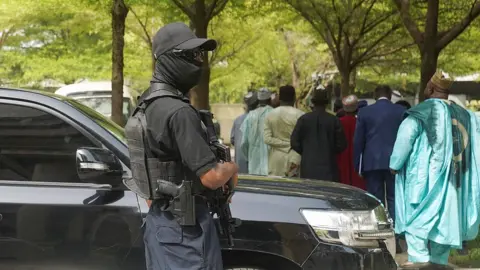
The celebratory parade for the event, which was to be attended by the President, was abruptly canceled at the last minute, prompting speculation and concern regarding national security. In January, the military made a vague statement revealing a court martial involving 16 unnamed senior officers, effectively admitting a foiled coup attempt.
Now, as court documents are released, they identify the alleged mastermind - Colonel Mohammed Ma'aji - and suggest that the aim of the plotters was to incite chaos leading up to an intended takeover. The six defendants, ranging from civilians to a serving police inspector, cannot face a military court and are charged with serious offenses including treason and terrorism. They deny the allegations.
The backdrop of Nigeria's military history adds weight to this narrative. Civilian rule has been established since 1999, but recent coup trends across West Africa raise concerns about stability in Nigeria, where economic hardship and political grievances simmer.
Court documents have highlighted Colonel Ma’aji’s military ties and involvement with former oil minister Timipre Sylva, who is seen as a major financier behind the alleged operation. Investigators have linked substantial sums of money to the conspiracy, citing payments made to various civilians who assisted in the planned coup.
As the trial progresses, key players, including the Islamic cleric Sani Abdulkadir, who allegedly accepted payments to act as a spiritual guide for the conspirators, come under scrutiny, as do various elements of Nigerian society involved in this shocking incident.
Furthermore, attention has fallen on the Nollywood actor Stanley Amandi, implicated as a propagandist for the coup attempt, stirring public sentiment and leveraging his media connections during the crisis. This incident raises profound questions regarding Nigeria's political future and the military's role amidst rising tensions. The next court appearance of the defendants is awaited with bated breath, as observers hope for clarity in a situation fraught with uncertainty.
The celebratory parade for the event, which was to be attended by the President, was abruptly canceled at the last minute, prompting speculation and concern regarding national security. In January, the military made a vague statement revealing a court martial involving 16 unnamed senior officers, effectively admitting a foiled coup attempt.
Now, as court documents are released, they identify the alleged mastermind - Colonel Mohammed Ma'aji - and suggest that the aim of the plotters was to incite chaos leading up to an intended takeover. The six defendants, ranging from civilians to a serving police inspector, cannot face a military court and are charged with serious offenses including treason and terrorism. They deny the allegations.
The backdrop of Nigeria's military history adds weight to this narrative. Civilian rule has been established since 1999, but recent coup trends across West Africa raise concerns about stability in Nigeria, where economic hardship and political grievances simmer.
Court documents have highlighted Colonel Ma’aji’s military ties and involvement with former oil minister Timipre Sylva, who is seen as a major financier behind the alleged operation. Investigators have linked substantial sums of money to the conspiracy, citing payments made to various civilians who assisted in the planned coup.
As the trial progresses, key players, including the Islamic cleric Sani Abdulkadir, who allegedly accepted payments to act as a spiritual guide for the conspirators, come under scrutiny, as do various elements of Nigerian society involved in this shocking incident.
Furthermore, attention has fallen on the Nollywood actor Stanley Amandi, implicated as a propagandist for the coup attempt, stirring public sentiment and leveraging his media connections during the crisis. This incident raises profound questions regarding Nigeria's political future and the military's role amidst rising tensions. The next court appearance of the defendants is awaited with bated breath, as observers hope for clarity in a situation fraught with uncertainty.