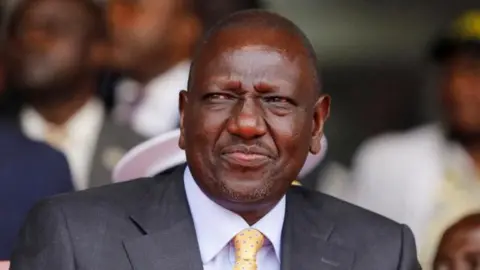
Kenyan President William Ruto has faced a social media backlash after publicly suggesting that Nigerian-accented English was incomprehensible and required a translator. Addressing Kenyans living in Italy on Monday, Ruto said: If you listen to a Nigerian speaking, you don't know what they are saying - you need a translator, while boasting that Kenyans spoke some of the best English in the world.
His remarks drew fierce condemnation from Nigerians and other Africans online who accused the Kenyan leader of demeaning a fellow African nation. English is a colonial language, not a measure of intelligence, capability, or national progress, wrote Hopewell Chin'ono, a Zimbabwean journalist.
As former British colonies, both Kenya and Nigeria share English as an official language, but each country has developed distinct spoken varieties with different phonetic structures. These differences reflect the influence of indigenous languages - Nigeria has more than 500 languages which shape its cadence and intonation, while Kenya's Bantu, Nilotic and Cushitic mix give rise to its own accents.
In his address, Ruto emphasized Kenya's education system and its impact on English proficiency, asserting that understanding Nigerians was particularly challenging. His comments sparked laughter in the audience, but they have since led to widespread online criticism, some calling it a demonstration of a deep inferiority complex rooted in colonial conditioning.
Former Nigerian senator Shehu Sani highlighted the irony of Ruto's remarks by referencing Nigeria's literary giants, including Nobel laureates. Others on social media implored Ruto to concentrate on more pressing issues within Kenya, such as unemployment and rising living costs, instead of engaging in seemingly petty insults.
While the incident has added fuel to the ongoing friendly rivalry between the two nations, some Kenyans have defended Ruto, arguing that critics misconstrued his humor.