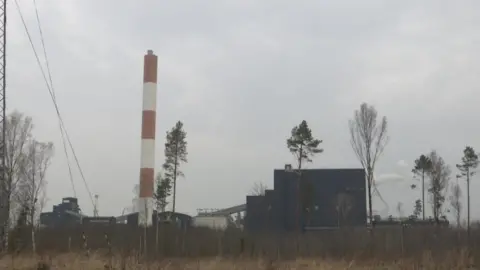
Ukrainian drones entered Estonian and Latvian air spaces from Russia overnight, with one hitting infrastructure and another crashing on land, according to authorities in Tallinn and Riga. One struck the chimney of a power plant in Auvere, Estonia, while another exploded in the Kraslava region of Latvia. Fortunately, no major damage or injuries were reported.
The incidents coincided with Ukraine's large-scale drone attack on the Russian port of Ust-Luga on the Baltic Sea, located around 25 kilometers from Estonia's border. Estonian Prime Minister Kristen Michal confirmed that Ust-Luga was attacked in three waves early in the morning. In response to the drone threats, Baltic air patrols were activated, and citizens received warnings on their mobile devices.
Estonian security officials indicated that the drones might have deviated from their intended paths either due to navigational errors or electromagnetic interference, especially given the military operations occurring close to their borders. Furthermore, Latvian authorities confirmed that the drone which landed on their territory was indeed of Ukrainian origin, leading to increased security measures.
In light of these events, Estonian security police chief Margo Palloson warned of potential future incidents and underscored the challenges posed by Russia's aggressive military actions in the region. The situation is compounded by a similar drone crash that occurred in Lithuania, with authorities there also confirming that their drone originated from Ukraine as part of military operations.
As tensions rise and military actions continue in the region, both Estonia and Latvia emphasize the need for greater airspace security to prevent further incursions and ensure the safety of residents.
The incidents coincided with Ukraine's large-scale drone attack on the Russian port of Ust-Luga on the Baltic Sea, located around 25 kilometers from Estonia's border. Estonian Prime Minister Kristen Michal confirmed that Ust-Luga was attacked in three waves early in the morning. In response to the drone threats, Baltic air patrols were activated, and citizens received warnings on their mobile devices.
Estonian security officials indicated that the drones might have deviated from their intended paths either due to navigational errors or electromagnetic interference, especially given the military operations occurring close to their borders. Furthermore, Latvian authorities confirmed that the drone which landed on their territory was indeed of Ukrainian origin, leading to increased security measures.
In light of these events, Estonian security police chief Margo Palloson warned of potential future incidents and underscored the challenges posed by Russia's aggressive military actions in the region. The situation is compounded by a similar drone crash that occurred in Lithuania, with authorities there also confirming that their drone originated from Ukraine as part of military operations.
As tensions rise and military actions continue in the region, both Estonia and Latvia emphasize the need for greater airspace security to prevent further incursions and ensure the safety of residents.