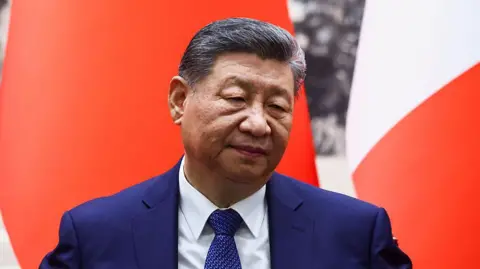
The recent military action in Venezuela has led to a dramatic shift that could upend decades of Chinese diplomacy in South America. Hours before the stunning US raid, Venezuelan President Nicolás Maduro praised Xi Jinping as 'an older brother' during a meeting with Chinese diplomats. However, this relationship has been flipped on its head as Maduro was captured and paraded on a US warship, raising alarms in Beijing.
China's heavy investments in oil-rich Venezuela, which were previously viewed as a secure partnership, are now at risk. The US government has condemned the actions against Maduro, branding them as a violation of international law, yet Beijing is evaluating its next strategic moves in light of this new chaos.
This tumultuous turn may challenge China's influence, with many observing how it will navigate potential instability in the global south. The historical context of US-led interventions, particularly in countries with significant oil reserves, casts a long shadow over China's outlook.
Experts suggest that China's leadership, accustomed to stability, is now facing uncertain repercussions as they balance their interests against an unpredictable US administration. As they reassess their foothold in the region, questions loom about future investments and relationships with Latin American countries wary of US intervention.
Ultimately, this incident adds to the growing tensions between China and the US, highlighting the complexities of international relations and the delicate balance of power. The long-term consequences of Trump's decision may lead to a significant reshaping of alliances and strategies in both hemispheres.