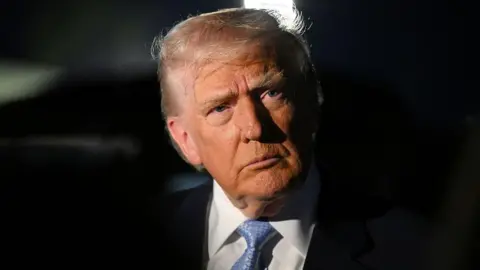
US President Donald Trump's seemingly coercive ultimatum regarding Greenland has sent shockwaves through diplomatic circles. The president’s threat implies that Western allies may face dire economic consequences if they oppose his proposal to annex the territory.
Faisal Islam argues this is a move unprecedented in its scale and seriousness—representing a form of economic warfare directed at some of America's closest partners. Such actions jeopardize the stability of NATO and the larger Western coalition.
These unconventional tactics, while not entirely unexpected from Trump, elevate tensions to a degree not seen before. The swift nature of the threat has left many international leaders stunned, as it challenges the fundamental principles of diplomacy and alliance.
As nations grapple with the ramifications, questions arise about the legitimacy and feasibility of Trump's threats. Would he truly have the congressional support to enforce such drastic measures? Economically, nations like Canada are already adapting, refocusing their trade efforts globally in the face of US tariffs.
However, the chilling implication of claiming territory from an ally poses a substantial risk not just to present relations but to global coherence. The prospect that such threats might originate from nations like China or Russia instead would evoke significant international outrage.
As the world watches and waits for further actions—or perhaps retractions—from the Trump administration, many hope that this troubling episode will quickly pass without leaving lasting damage to global diplomacy.