At least 34 people have died and dozens more are injured after air strikes from Myanmar's military hit a hospital in the country's west on Wednesday night, according to ground sources.
The hospital is located in Mrauk-U town in Rakhine state, an area controlled by the Arakan Army - one of the strongest ethnic armies fighting the country's military regime.
Thousands have died and millions have been displaced since the military seized power in a coup in 2021 and triggered a civil war.
In recent months, the military has intensified air strikes to take back territory from ethnic armies. It has also deployed paragliders to drop bombs on its enemies.
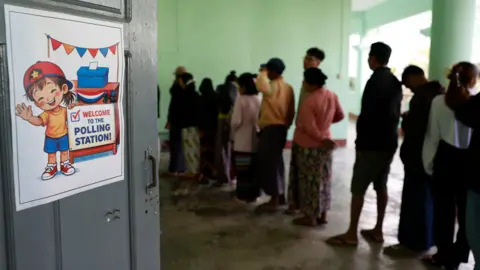
The Myanmar military has not commented on the strikes, which come as the country prepares to vote later this month in its first election since the coup.
However, pro-military accounts on Telegram claim the strikes this week were not aimed at civilians.
Khaing Thukha, a spokesperson for the Arakan Army, told the BBC that most of the casualties were patients at the hospital.
This is the latest vicious attack by the terrorist military targeting civilian places, he said, adding that the military must take responsibility for bombing civilians.
The Arakan Army health department reported that the strike occurred at around 21:00 (14:30 GMT), killing 10 patients on the spot and injuring many others.
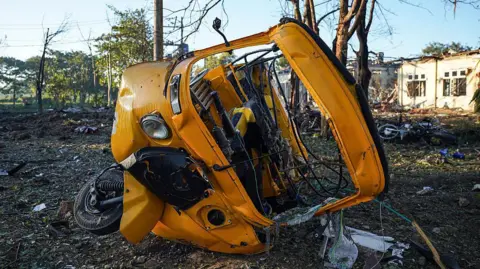
Photos believed to be from the scene have been circulating on social media showing missing roofs across parts of the building complex, broken hospital beds, and debris strewn across the ground.
The junta has been locked in a years-long bloody conflict with ethnic militias, at one point losing control of more than half the country.
But a recent influx of technology and equipment from China and Russia seems to have bolstered its efforts. The junta has made significant gains through a campaign of airstrikes and heavy bombardment.
Earlier this year, an army motorised paraglider dropped bombs on a crowd protesting at a religious festival, resulting in over 20 deaths.
Civil liberties have drastically decreased under the junta, with tens of thousands of political dissidents reportedly arrested.
Myanmar's junta is pushing for a general election on December 28, presenting it as a pathway to political stability.
Critics argue the election will be neither free nor fair, but rather a means for the junta to establish legitimacy. UN human rights expert Tom Andrews has labeled it a sham election.
Recent weeks have seen the junta arrest civilians accused of disrupting the vote, including an individual who allegedly distributed anti-election messages on social media.
Ethnic armies and other opposition groups have pledged to boycott the polls, and at least one electoral candidate has reportedly been detained by an anti-junta faction.