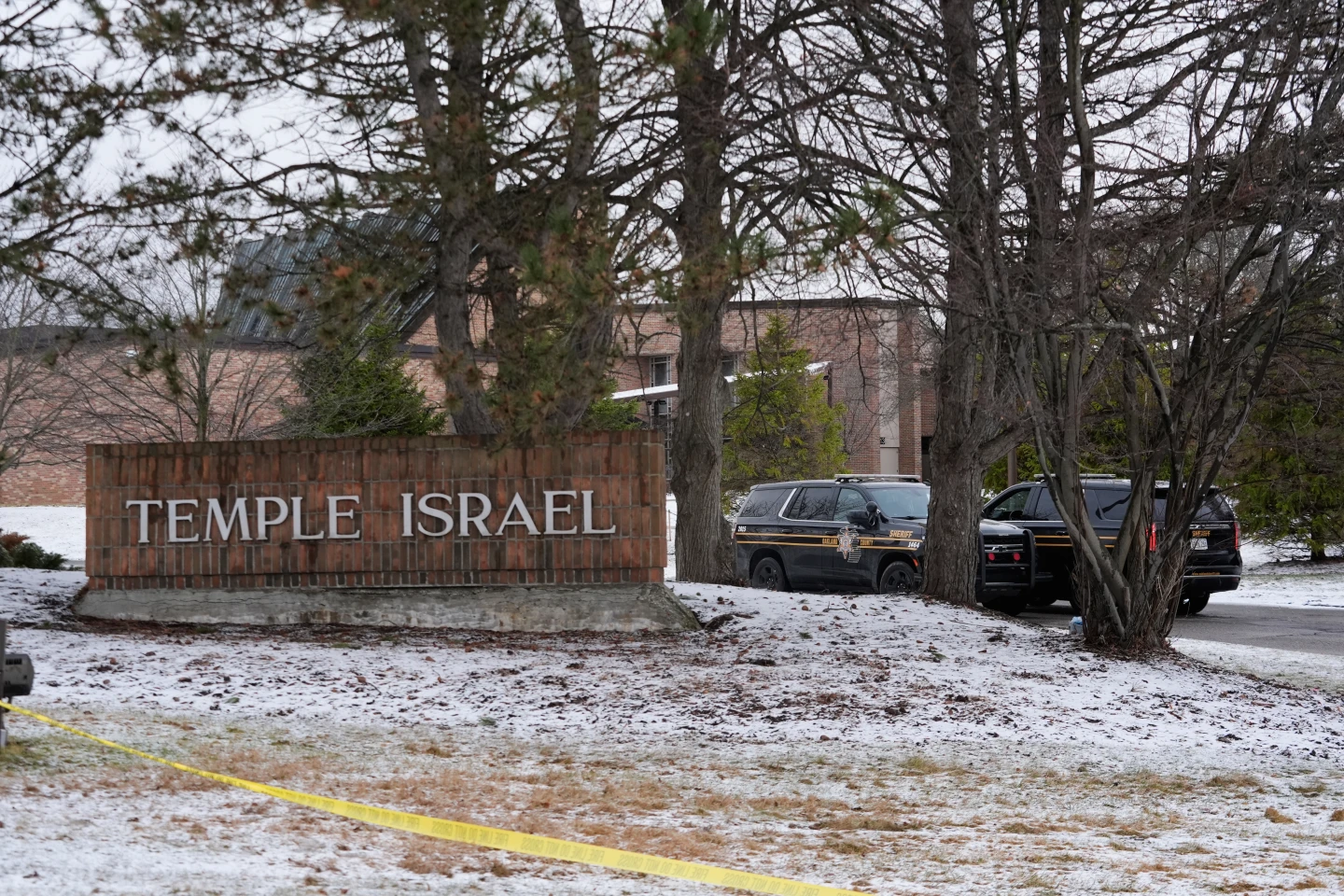
PONTIAC, Mich. (AP) — Temple Israel in Michigan posted images on social media Thursday, displaying significant fire damage resulting from a tragic incident last week in which a man drove a pickup truck into the building before taking his own life. One poignant photo captures untouched tables of fruits and snacks that were meant for a midday gathering, underlining the disruption to what should have been a joyful occasion, particularly near an early childhood education area.
The released images reveal the extent of destruction, including exposed wiring, a charred ceiling, and ruined celebratory photographs. The synagogue communicated on Facebook that it chose to reveal these images after other, potentially harmful representations emerged in the media, expressing a desire to reclaim the narrative of their sacred space. 'This is our sacred space, and we will be the ones to tell its story,' they stated, emphasizing their commitment to their community's healing.
On March 12, Ayman Ghazali, 41, drove his pickup through the synagogue's entrance, injuring a security guard in the process; this occurred after he had remained in the parking lot for two hours. Following an exchange of gunfire with security staff, Ghazali took his own life. The FBI confirmed that the truck was equipped with commercial-grade fireworks and jugs of gasoline, heightening the tragic nature of the event.
Fortunately, no children or staff sustained injuries due to the attack. However, the FBI has yet to establish a clear motive. Reports suggest that Ghazali’s ex-wife had contacted authorities around the time of the attack to express concerns about his mental state, elaborating on his emotional distress following a recent loss of family members from an Israeli airstrike in Lebanon.
As investigations continue, the synagogue maintains its focus on healing, aiming to support its community while shedding light on the implications of such attacks on places of worship.
The released images reveal the extent of destruction, including exposed wiring, a charred ceiling, and ruined celebratory photographs. The synagogue communicated on Facebook that it chose to reveal these images after other, potentially harmful representations emerged in the media, expressing a desire to reclaim the narrative of their sacred space. 'This is our sacred space, and we will be the ones to tell its story,' they stated, emphasizing their commitment to their community's healing.
On March 12, Ayman Ghazali, 41, drove his pickup through the synagogue's entrance, injuring a security guard in the process; this occurred after he had remained in the parking lot for two hours. Following an exchange of gunfire with security staff, Ghazali took his own life. The FBI confirmed that the truck was equipped with commercial-grade fireworks and jugs of gasoline, heightening the tragic nature of the event.
Fortunately, no children or staff sustained injuries due to the attack. However, the FBI has yet to establish a clear motive. Reports suggest that Ghazali’s ex-wife had contacted authorities around the time of the attack to express concerns about his mental state, elaborating on his emotional distress following a recent loss of family members from an Israeli airstrike in Lebanon.
As investigations continue, the synagogue maintains its focus on healing, aiming to support its community while shedding light on the implications of such attacks on places of worship.