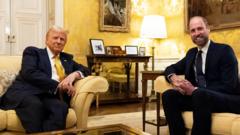
In a moment filled with historical significance, Prince William of Wales met with US President-elect Donald Trump during a ceremonial event marking the reopening of the iconic Notre-Dame cathedral in Paris. The cathedral, a symbol of French heritage, recently underwent extensive restoration following a catastrophic fire that caused widespread damage five years ago.
The ceremonial gathering drew numerous world leaders, including French President Emmanuel Macron, who delivered a poignant speech emphasizing the importance of humility and resilience. During a brief exchange between William and Trump, the president-elect praised the prince, stating he was a “good man” doing a “fantastic job.”
Despite a delayed arrival due to stormy weather, Prince William attended the ceremony at the request of the UK government, highlighting the ongoing importance of the US-UK "special relationship." He was expected to engage Trump and Dr. Jill Biden in discussions regarding diplomatic ties while they were all in attendance.
The event unfolded with over 1,500 guests, including dignitaries like Ukrainian President Volodymyr Zelensky. The Archbishop of Paris led the reopening service, with heartfelt messages from attendees and a choral performance setting the scene.
Both leaders seemed to share a cordial rapport, with the warmer tone contrasted against the political backdrop of their nations. The prince’s public service and environmental initiatives stand in stark contrast to Trump’s earlier dismissal of green efforts, bringing forth questions about the future of cooperation aimed at addressing global issues.
As the restoration of Notre-Dame ushers in a new era for Paris and beyond, Prince William's role serves as a reminder of the crucial connections that traverse the Atlantic, with royal diplomacy poised to navigate the changing tides of Western alliances. With the cathedral's reopening, the hope for a renewed and robust partnership between the US and UK remains a focal point.
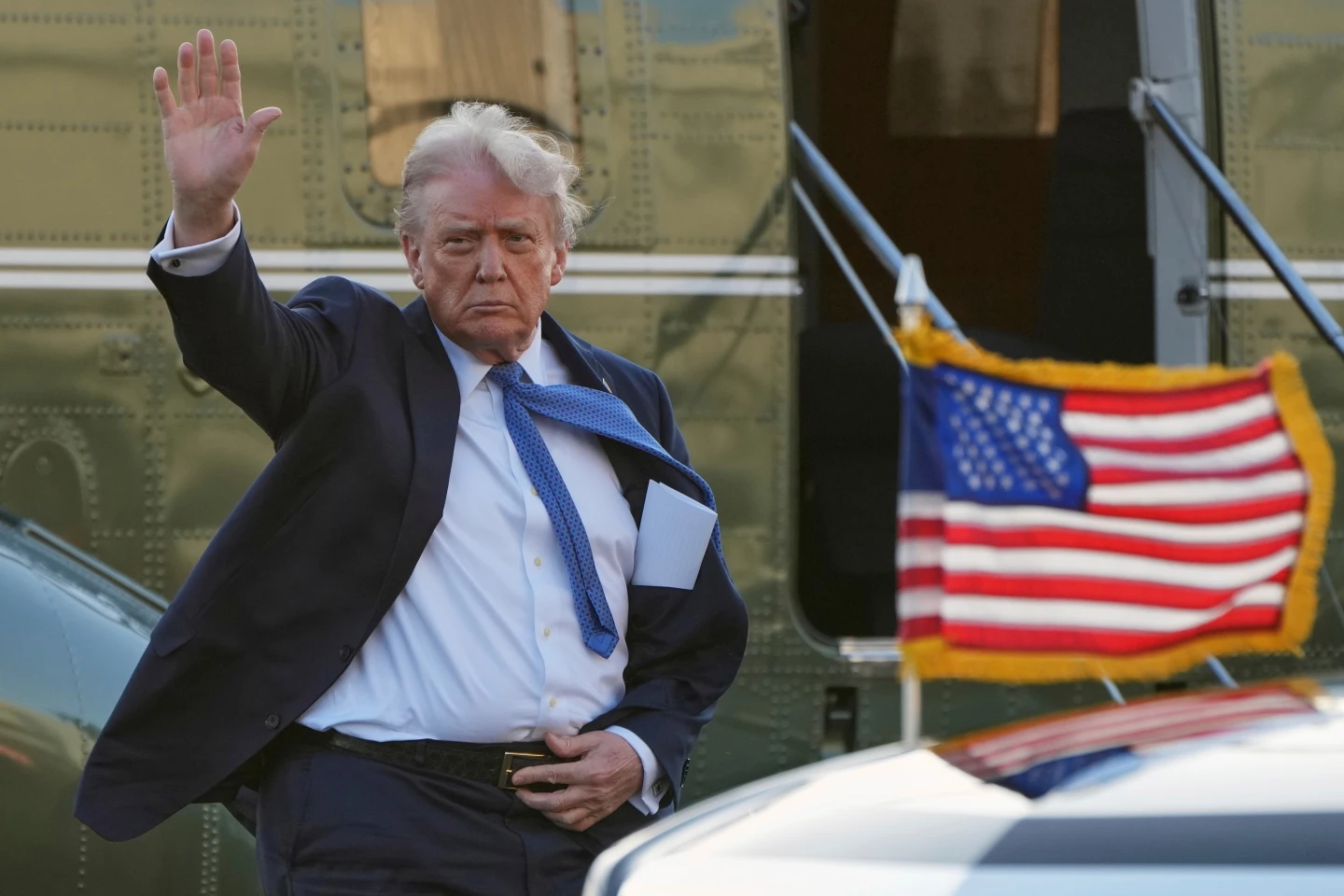
![Trump Goes Global—Headlining America’s 250th‑Anniversary Fair","description":"Former president Donald Trump claims the spotlight as he headlines the historic Great American State Fair celebrating the United States’ 250th anniversary, while also reshaping the national narrative across a range of high‑profile events.","summary":"After a mass withdrawal of performers, Trump declares himself the headlining act for the Great American State Fair, underscoring his tendency to center events around his persona. The article explores how this decision fits into a broader pattern of Trump’s involvement in national celebrations—from the White House, to the U.S. Mint, to the 2026 FIFA World Cup—and contrasts his style with that of previous presidents who hosted commemorative festivities.","image":"https://dims.apnews.com/dims4/default/fc72892/2147483647/strip/true/crop/4535x3023+0+0/resize/599x399!/quality/90/?url=https%3A%2F%2Fassets.apnews.com%2F69%2F19%2F180862c0fcd10a7899071cf8bb32%2F5237373024674d20888ae9afa79553a0","text":"<h1 style='font-size:1.8em;font-weight:bold;margin-bottom:.5em;'>Trump Goes Global—Headlining America’s 250th‑Anniversary Fair</h1>\n<p style='margin-bottom:1em;'>After a nearly total withdrawal of scheduled performers—who feared the event had become too closely tied to his brand—former president Donald Trump announced he would serve as the headlining act for the Great American State Fair. By stepping onto the stage himself, Trump removed any speculation that a sitting or former president might sidestep national celebrations larger than his own persona.</p>\n<h2 style='font-size:1.4em;font-weight:bold;margin-top:1.5em;'>A Pattern of Personalization</h2>\n<p style='margin-bottom:1em;'>Trump’s flair for making events personal dates back to his days on reality television and continues to shape his post‑presidency public life. He has built a patio at the White House reminiscent of a Mar‑a‑Lago fixture, routinely hosts fundraisers at his Florida and New Jersey properties, and has overseen fresh renovations of the historic building. The administration’s push to redesign Washington itself underscores a broader campaign to “restore truth and sanity” to American history, according to a 2025 executive order.</p>\n<h2 style='font-size:1.4em;font-weight:bold;margin-top:1.5em;'>Re‑Imagining the 250th—From Currency to Coin</h2>\n<p style='margin-bottom:1em;'>The celebration is being marked with a suite of tangible memorabilia: passports bearing Trump’s likeness, a new $250 bill, and a 24‑karat gold commemorative coin produced by the U.S. Mint. The coins hark back to the 1926 half‑dollar silver coin that featured President Calvin Coolidge for America’s 150th anniversary and underscore an effort to embed Trump’s image in the nation’s heritage.</p>\n<h2 style='font-size:1.4em;font-weight:bold;margin-top:1.5em;'>Historic vs. Historic</h2>\n<p style='margin-bottom:1em;'>Trump’s approach to the 2024 bicentennial diverges sharply from predecessors. While Ulysses S. Grant compiled a century‑old exposition in 1876 and Richard Nixon opened a “Bicentennial Era” in 1971, both focused on unity and nation‑building. Former President Gerald Ford similarly leveraged the 1976 celebrations to bolster his re‑election campaign without courting the self‑focused theatrics now associated with Trump.</p>\n<h2 style='font-size:1.4em;font-weight:bold;margin-top:1.5em;'>The World Cup Connection</h2>\n<p style='margin-bottom:1em;'>Trump’s novel “hosting” agenda extends to the 2026 FIFA World Cup co‑hosted with Mexico and Canada. He forged a federal task force, collected a FIFA peace prize, and even supervised the tournament’s draw and trophy presentation. His vision of involving the U.S. in global sporting events illustrates the same drive to make world stages his personal platform.</p>\n<h2 style='font-size:1.4em;font-weight:bold;margin-top:1.5em;'>Future Tensions and Alternatives</h2>\n<p style='margin-bottom:1em;'>The American 250 organization, charged by Congress to steer the nation’s bicentennial celebrations, has clashed over priorities with the Trump‑aligned Freedom 250 alliance. The tug‑of‑war underscores a deep rift between an administration that re‑writes history as propaganda and scholars who insist on fact‑based commemoration.</p>\n<p style='margin-top:2em;font-style:italic;font-size:.9em;'>[Read further in the full article.]</p>\n<img style='display:block;margin:2em auto;width:600px;height:auto;' src='https://dims.apnews.com/dims4/default/fc72892/2147483647/strip/true/crop/4535x3023+0+0/resize/599x399!/quality/90/?url=https%3A%2F%2Fassets.apnews.com%2F69%2F19%2F180862c0fcd10a7899071cf8bb32%2F5237373024674d20888ae9afa79553a0' alt=\"President Donald Trump arrives at Leesburg Executive Airport on Marine One\">](/m/8a/dd/8add8714e496f5ac84720a8d986efa6bbad8abd6ba0f4f66a59366ff8c13b648/o.webp)